(I've been doing a lot of recalibrating in my life the past couple of weeks but I'm now back to blogging for a while...I hope.)
There was something of a kerfuffle in the movie critic world in 2011 when Dan Kois, a writer for the New York Times, did a piece about on how some films are "cultural vegetables", meaning people watch them because the critical establishment tells them they are worthwhile and enlightening, not because they are enjoyable in any sense. One of the films he criticized in his piece was Stalker, a 1979 Russian science fiction film by director Andrei Tarkovsky. I've just seen this movie and honestly, I have no idea what the man was talking about. Yeah, it's long and brooding but to me it was a deep and compelling film that went by faster than its supposed 165 minutes.
It is set in an unnamed country where some years earlier something from outer space landed in an wooded area and transformed it into an overgrown wilderness full of traps and false trails that was since cordoned off by the authorities and named the Zone. In the center of this place exists a room that will grant anyone who walks in their fondest wish. The central character is a man who makes his living taking people on trips into the Zone and guiding them through all the dangers to reach that room . The film follows one particular trip he takes with a professor and a writer who have different motives for entering the Zone.
First of all the film looks beautiful. The scenes in the everyday world are in sharp, almost tactile black and white that gives a sense of the oppresive weight and dirt in this landscape. Then when things shift to the Zone, the movie apes The Wizard Of Oz and changes to color, not overly bright but a darker, muted color that fits the overall mood of the story.
There is a constant mood of suspense through the trio's journey conveyed largely by the guide's wary demeanour. He has the haunted yet resigned look of a man who's seen dreadful things happen to others in this place and is trying not to become its next victim. Then about two-thirds of the way through the picture, something completely unexpected happens which turns everything we've seen to tht point on its head and presents the entire story in a different light. Near the end when things seem to have settled into their new pattern, another surprise occurs which turns the tale in yet another direction and wipes away any thought of easy resolution.
Stalker is really a debate about faith and scepticism cloaked in a science fiction plot with people who believe in the fantastic set against those who don't want to dream. Its slowness presents an aura of creeping dread that really draws you in and holds your attention without relying on dead bodies or special effects to keep the suspense going. Heavy? Yes. Brooding? Definitely. Dark? To a point. When all is said Stalker is an excellent film well deserving of the exalted reputation it enjoys in the film world. Sometimes vegetables can taste pretty damn good.
Wednesday, March 26, 2014
Monday, February 17, 2014
Stephan Crump's Rosetta Trio
It's always fun to go to a concert not knowing quite what to expect and being pleasantly surprised about what you hear. That was my response to seeing Stephan Crump's Rosetta Trio at Bohemian Caverns last night.
The trio consists of Crump on bass, Liberty Ellman on acoustic guitar and Jamie Fox on electric guitar. Before last night I knew Crump from Vijay Iyer's trio, had heard Ellman's name in a couple of places and didn't know Fox at all. Together they played jazz that was flowing and rhythmic in complex lines without distortion or effects. They could be delicate or swing mercilessly. I was reminded of other modern guitar sounds like the clean chording of the late Jim Hall and the thoughtfulness of Ralph Towner. On a lazy blues called "Memphis" Fox even bent a few notes in the direction of B.B. King.
All three men had ample chance to show what they could in solo turns and Crump particularly impressed me with his drive and imagination. Not only does he have three CDs out with this group, he's also done a duo disc with a very different sort of guitarist, Mary Halvorson. I'll love to hear how he deals with her abrasive chords and melodies.
You don;t hear anything about the Rosetta Trio, even in modern "out" jazz circles but they are definitely worth investigating, just one great example of the infinite beauties found in the jazz world today.
Tuesday, February 11, 2014
The Jazz World: The Cool
The Birth Of The Cool
In the 1950's there was continued investigation into the idea of exploring advanced harmonies and textures in jazz music. The most significant attempt at this came from a group of young musicians who met together repeatedly at the New York apartment of arranger and composer Gil Evans in the late 1940's. These men, who included Miles Davis, John Lewis, Lee Konitz, Max Roach and Gerry Mulligan, looked at bringing in instruments not used in jazz often like French horn and tuba to create a larger unified sound and took cues from the work of French impressionist composers like Ravel and Debussy. What emerged was a style of jazz that worked at a lower intensity than bebop but was still sophisticated and swinging, a style that came to be known as "Cool Jazz". The results of this work were recorded by a nine piece group under the leadership of Miles Davis, sessions that eventually came out as an album entitled Birth Of The Cool.
This is a sample of that wotrk, a Gerry Mulligan composition called "Jeru":
Gerry Mulligan
I'll talk about Miles Davis and Gil Evans in later posts but for now I want to concenrtnate on Gerry Mulligan. Mulligan was known first as an arranger but he later gained fame for his effortless way with the unwieldy baritone sax. He took the Birth of the Cool ideas to the West Coast where an entire movement of cerebral, easy-swinging players would emerge, men like Shorty Rogers, Art Farmer, Chet Baker, Chico Hamilton, and Jim Hall.
Mulligan's biggest innovation was in putting together a small group without a piano, just two horns and a rhythm section. Jazz without the harmonic bridge of a piano was virtually unheard of at the time but Mulligan pitting the low sound of his baritone against the trumpets of either Baker or Farmer or the valve trombone of Bob Brookmeyer gave his band's sound a flowing freedom that would resonate in different forms through later years. Here is a 1957 Mulligan quartet with Brookmeyer playing "Open Country":
Jimmy Giuffre
Jimmy Giuffre was not part of the "Birth of the Cool" sessions but he had ideas along the same lines. Adept at a number of reed instruments, he first played and wrote for big bands, most famously composing the saxophone section workout "Four Brothers" for the Woody Herman Orchestra but he soon developed his own concept of quiet, unusual instrumental combinations, working in trios with bass and either (again) Bob Brookmeyer's trombone or Jim Hall's guitar. He did a lot of work with simple blues and folk forms in the Fifties before eventually going more abstract in the mid-60's. Here he is on various reeds with Hall and Jim Atlas on bass in 1957 doing his composition "The Train and The River".
The Modern Jazz Quartet
John Lewis was part of the "Cool" sessions but his main interests turned out to come from the past, the baroque music of Bach and his contemporaries. Lewis had been pianist in Dizzy Gillespie's big band and during their concerts, he and the rest of the rhythm section, Milt Jackson on vibraphone, Ray Brown on bass and Kenny Clarke on drums, would play a few numbers to give the horn players a break. Eventually that quartet would go out on its own as the Modern Jazz Quartet with Percy Heath replacing Brown and Connie Kay replacing Clarke. The group was originally co-led by Lewis and Jackson but eventually Lewis took over the sole reigns and began to explore in depth merging classical music and jazz. The polite elegance of his piano and the bluesy gravity of Jackson's vibes made a stark but sexy contrast, distinctive enough to make the Modern Jazz Quartet last through five decades, playing all over the world, collaborating with symphony orchestras and in their own way, presenting an image of the black jazz musician as a dignified serious artist, something that looking back was a powerful statement for its time. This is a studio recording of one of their most popular tunes, Lewis' "Django", a piece that strongly states their classics/jazz dichotomy.
Dave Brubeck
I wrote a post about Brubeck when he passed away but I can't leave him out here. He was another musician who brought classical influences to jazz, experimenting with advanced harmonies and unusual time signatures. After trying out an octet in the late 40's, he began a partnership with alto saxophonist Paul Desmond that lasted over twenty years. Brubeck's driving, angular playing mixed with Desmond's sighing, liquid sax was a perfectly balanced combination and with Eugene Wright and Joe Morello in the rhythm section they were the most popular jazz group of their day, even managing a Top 10 pop hit in "Take Five". After the quartet broke up in 1967 Brubeck continued to work with other quartets as well as composing extended orchestral works and played almost up until his death in 2012. Some people in the old days complained that Brubeck's music didn't swing enough but by the time he died he was universally regarded as one of the finest musicians in the music's history. Here is the classic Brubeck quartet doing "Blue Rondo A La Turk" on one of Hugh Hefner's Playboy TV shows. Cecil Taylor has always cited Brubeck as a favorite player. His solo here clues you in as to why.
In the 1950's there was continued investigation into the idea of exploring advanced harmonies and textures in jazz music. The most significant attempt at this came from a group of young musicians who met together repeatedly at the New York apartment of arranger and composer Gil Evans in the late 1940's. These men, who included Miles Davis, John Lewis, Lee Konitz, Max Roach and Gerry Mulligan, looked at bringing in instruments not used in jazz often like French horn and tuba to create a larger unified sound and took cues from the work of French impressionist composers like Ravel and Debussy. What emerged was a style of jazz that worked at a lower intensity than bebop but was still sophisticated and swinging, a style that came to be known as "Cool Jazz". The results of this work were recorded by a nine piece group under the leadership of Miles Davis, sessions that eventually came out as an album entitled Birth Of The Cool.
This is a sample of that wotrk, a Gerry Mulligan composition called "Jeru":
Gerry Mulligan
I'll talk about Miles Davis and Gil Evans in later posts but for now I want to concenrtnate on Gerry Mulligan. Mulligan was known first as an arranger but he later gained fame for his effortless way with the unwieldy baritone sax. He took the Birth of the Cool ideas to the West Coast where an entire movement of cerebral, easy-swinging players would emerge, men like Shorty Rogers, Art Farmer, Chet Baker, Chico Hamilton, and Jim Hall.
Mulligan's biggest innovation was in putting together a small group without a piano, just two horns and a rhythm section. Jazz without the harmonic bridge of a piano was virtually unheard of at the time but Mulligan pitting the low sound of his baritone against the trumpets of either Baker or Farmer or the valve trombone of Bob Brookmeyer gave his band's sound a flowing freedom that would resonate in different forms through later years. Here is a 1957 Mulligan quartet with Brookmeyer playing "Open Country":
Jimmy Giuffre
Jimmy Giuffre was not part of the "Birth of the Cool" sessions but he had ideas along the same lines. Adept at a number of reed instruments, he first played and wrote for big bands, most famously composing the saxophone section workout "Four Brothers" for the Woody Herman Orchestra but he soon developed his own concept of quiet, unusual instrumental combinations, working in trios with bass and either (again) Bob Brookmeyer's trombone or Jim Hall's guitar. He did a lot of work with simple blues and folk forms in the Fifties before eventually going more abstract in the mid-60's. Here he is on various reeds with Hall and Jim Atlas on bass in 1957 doing his composition "The Train and The River".
The Modern Jazz Quartet
John Lewis was part of the "Cool" sessions but his main interests turned out to come from the past, the baroque music of Bach and his contemporaries. Lewis had been pianist in Dizzy Gillespie's big band and during their concerts, he and the rest of the rhythm section, Milt Jackson on vibraphone, Ray Brown on bass and Kenny Clarke on drums, would play a few numbers to give the horn players a break. Eventually that quartet would go out on its own as the Modern Jazz Quartet with Percy Heath replacing Brown and Connie Kay replacing Clarke. The group was originally co-led by Lewis and Jackson but eventually Lewis took over the sole reigns and began to explore in depth merging classical music and jazz. The polite elegance of his piano and the bluesy gravity of Jackson's vibes made a stark but sexy contrast, distinctive enough to make the Modern Jazz Quartet last through five decades, playing all over the world, collaborating with symphony orchestras and in their own way, presenting an image of the black jazz musician as a dignified serious artist, something that looking back was a powerful statement for its time. This is a studio recording of one of their most popular tunes, Lewis' "Django", a piece that strongly states their classics/jazz dichotomy.
Dave Brubeck
I wrote a post about Brubeck when he passed away but I can't leave him out here. He was another musician who brought classical influences to jazz, experimenting with advanced harmonies and unusual time signatures. After trying out an octet in the late 40's, he began a partnership with alto saxophonist Paul Desmond that lasted over twenty years. Brubeck's driving, angular playing mixed with Desmond's sighing, liquid sax was a perfectly balanced combination and with Eugene Wright and Joe Morello in the rhythm section they were the most popular jazz group of their day, even managing a Top 10 pop hit in "Take Five". After the quartet broke up in 1967 Brubeck continued to work with other quartets as well as composing extended orchestral works and played almost up until his death in 2012. Some people in the old days complained that Brubeck's music didn't swing enough but by the time he died he was universally regarded as one of the finest musicians in the music's history. Here is the classic Brubeck quartet doing "Blue Rondo A La Turk" on one of Hugh Hefner's Playboy TV shows. Cecil Taylor has always cited Brubeck as a favorite player. His solo here clues you in as to why.
Labels:
Dave Brubeck,
Gerry Mulligan,
jazz,
Miles Davis,
Modern Jazz Quartet
Sunday, January 26, 2014
The Jazz World: Composers and Theorists
Moving on to a few more of the music's great post-war composers, the first stop has to be my single favorite jazz musician...
Charles Mingus
Mingus was a singular figure in an universe full of them, a man who wrote music with both classical ambitions and gutbucket passions, who could turn the blues into all manner of soaring, aching shapes. Much of his work reflected his environment, deep-souled love songs, tributes to past masters like Lester Young, tone poems that asked big questions about life, and works that dealt with the civil rights struggles of the Fifties and Sixties in pieces like "Fables Of Faubus" and "Meditations On A Pair Of Wire Cutters". No matter what the subject matter, Mingus' bands with his booming bass in the lead, swung murderously. This is one of his greatest works, 10 minutes of soul shouting on the topic of prehistoric man, "Pithecanthropus Erectus":
Mingus had the benefit of having some extraordinary musicians in his band over his career like saxophonists Clifford Jordan, Eric Dolphy and George Adams, trumpeters Johnny Coles and Jack Walrath, pianists Jaki Byard and Don Pullen and his almost constant rhythm mate, drummer Dannie Richmond. This is a live clip of a 1964 Mingus group that included Coles, Byard, Jordan and Dolphy doing the Ellington-Strayhorn classic, "Take The 'A' Train. The most notable parts are Byard's romping stride piano spot and Dolphy beaming in from another planet on bass clarinet:
Lennie Tristano
Lennie Tristano was a blind pianist who emerged in the late 40's with a methodology akin to bebop. He rolled out long streams of improvisations on the chords of standard tunes but with nods in the direction of Johann Sebastian Bach and atonality, creating more openly experimental music than what Parker, Gillespie and their cohorts were doing. A number of great musicians studied with Tristano, the most prominent being saxophonists Lee Konitz and Warne Marsh. In 1949, they were part of a Tristano recording session of pieces called "Intuition" and "Digression" which were completely improvised with no use of prearranged melodies and harmonies. These works are now considered the first examples of Free Jazz.
The Tristano clip below requires a little background. Look Up and Live was an anthology program of religious drams that ran Sunday morning on CBS from 1954 to 1979. In the summer of 1964, as the host explains, they took a break to explore the performing arts, which in this case meant, filming Tristano's quintet, including Konitz and Marsh, during a gig at New York's Half Note club. There is an attempt during the show to tie the music to religious/philosophical themes, but think about what's being presented here. Can you imagine any sort of religious broadcast today just letting a jazz group play on air for a half-hour? For that matter, can you imagine any TV show today doing such a thing? This was one of the beautiful by-products of Jazz being part of mainstream adult culture way back when:
George Russell
George Russell's major contribution to Jazz was not a composition but a theory. "The Lydian Chromatic Concept of Tonal Organization for Improvisation" proposed a new musical system where chords replaced scales as the basis for improvisation giving musicians a greater range of options to play with. Russell gives a thumbnail sketch of his ideas in this interview excerpt from a 1958 TV show, The Subject Is Jazz:
Russell's work would be absorbed by a number of restless young musical minds including Miles Davis, John Coltrane and Ornette Coleman, which right there makes him an influence on the next several decades of Jazz. He led small groups through the 50's, working with players like Eric Dolphy and Don Ellis, and spent some time in Europe during the 60's, making the acquaintance along the way of a group of young Norwegian musicians including Jan Garbarek and Terje Rypdal who would go on to long and productive careers. Russell's later composing stretched to longer form works that included electronics, rock rhythms and even lashings of go-go and funk. I couldn't find a copy to post here but he did a version of "You Are My Sunshine" with Sheila Jordan on vocals that is amazing.
This is one of Russell's classic early compositions, "Ezz-thetic":
And this is an excerpt from one of his later works, "Listen To The Silence", featuring members of his Norwegian crew like Garbarek, Rypdal and Bobo Stenson.
Charles Mingus
Mingus was a singular figure in an universe full of them, a man who wrote music with both classical ambitions and gutbucket passions, who could turn the blues into all manner of soaring, aching shapes. Much of his work reflected his environment, deep-souled love songs, tributes to past masters like Lester Young, tone poems that asked big questions about life, and works that dealt with the civil rights struggles of the Fifties and Sixties in pieces like "Fables Of Faubus" and "Meditations On A Pair Of Wire Cutters". No matter what the subject matter, Mingus' bands with his booming bass in the lead, swung murderously. This is one of his greatest works, 10 minutes of soul shouting on the topic of prehistoric man, "Pithecanthropus Erectus":
Mingus had the benefit of having some extraordinary musicians in his band over his career like saxophonists Clifford Jordan, Eric Dolphy and George Adams, trumpeters Johnny Coles and Jack Walrath, pianists Jaki Byard and Don Pullen and his almost constant rhythm mate, drummer Dannie Richmond. This is a live clip of a 1964 Mingus group that included Coles, Byard, Jordan and Dolphy doing the Ellington-Strayhorn classic, "Take The 'A' Train. The most notable parts are Byard's romping stride piano spot and Dolphy beaming in from another planet on bass clarinet:
Lennie Tristano
Lennie Tristano was a blind pianist who emerged in the late 40's with a methodology akin to bebop. He rolled out long streams of improvisations on the chords of standard tunes but with nods in the direction of Johann Sebastian Bach and atonality, creating more openly experimental music than what Parker, Gillespie and their cohorts were doing. A number of great musicians studied with Tristano, the most prominent being saxophonists Lee Konitz and Warne Marsh. In 1949, they were part of a Tristano recording session of pieces called "Intuition" and "Digression" which were completely improvised with no use of prearranged melodies and harmonies. These works are now considered the first examples of Free Jazz.
The Tristano clip below requires a little background. Look Up and Live was an anthology program of religious drams that ran Sunday morning on CBS from 1954 to 1979. In the summer of 1964, as the host explains, they took a break to explore the performing arts, which in this case meant, filming Tristano's quintet, including Konitz and Marsh, during a gig at New York's Half Note club. There is an attempt during the show to tie the music to religious/philosophical themes, but think about what's being presented here. Can you imagine any sort of religious broadcast today just letting a jazz group play on air for a half-hour? For that matter, can you imagine any TV show today doing such a thing? This was one of the beautiful by-products of Jazz being part of mainstream adult culture way back when:
George Russell
George Russell's major contribution to Jazz was not a composition but a theory. "The Lydian Chromatic Concept of Tonal Organization for Improvisation" proposed a new musical system where chords replaced scales as the basis for improvisation giving musicians a greater range of options to play with. Russell gives a thumbnail sketch of his ideas in this interview excerpt from a 1958 TV show, The Subject Is Jazz:
Russell's work would be absorbed by a number of restless young musical minds including Miles Davis, John Coltrane and Ornette Coleman, which right there makes him an influence on the next several decades of Jazz. He led small groups through the 50's, working with players like Eric Dolphy and Don Ellis, and spent some time in Europe during the 60's, making the acquaintance along the way of a group of young Norwegian musicians including Jan Garbarek and Terje Rypdal who would go on to long and productive careers. Russell's later composing stretched to longer form works that included electronics, rock rhythms and even lashings of go-go and funk. I couldn't find a copy to post here but he did a version of "You Are My Sunshine" with Sheila Jordan on vocals that is amazing.
This is one of Russell's classic early compositions, "Ezz-thetic":
And this is an excerpt from one of his later works, "Listen To The Silence", featuring members of his Norwegian crew like Garbarek, Rypdal and Bobo Stenson.
Labels:
Charles Mingus,
George Russell,
jazz,
Lennie Tristano
Sunday, January 19, 2014
Inside on the Outside
![]() |
| Out in the cold again. |
Like it or not, Davis is a niche film. I'm a huge music fan and I'm familiar with the 60's Greenwich Village folk scene, but how many other people in the greater audience are? All the publicity for the film mentioned that it was inspired by the life and career of Dave Van Ronk. How many people out there had even heard the name Dave Van Ronk before this movie came along?
Davis' narrow, self-defeating version of "artistic integrity" may resonate beyond the period but you had to get beyond references to Peter, Paul and Mary, novelty songs about the space program and other period names and places to get there. It was a movie where the protagonist meanders between different peoples' apartments, takes a fruitless trip to Chicago and ends up in the exact same place where he started. It was expertly told but had no forward movement at all, unlike the heavily nominated and equally striking small film Nebraska where another futile trip at least leads to some character development and growth.
The understated, somber mood of this film isn't like the goony, crowd-pleasing humor of the Coens' other more celebrated "folk" musical, Oh, Brother Where Are Thou? It's more like their dryly humorous take on Hebrew traditions and the story of Job, A Simple Man and that was no Oscar bait movie either. In other words I cannot bring myself to be mad about Davis' Oscar snubbing. Heck, there was another great film about a later generation of New York folksinger that came along this year, Greetings From Tim Buckley and almost no one is championing that.
Saturday, January 11, 2014
Mike Vraney (1957-2014)
I found out yesterday that Mike Vraney passed away from lung cancer on January 2 at the age of 56. This doesn't mean anything to the vast majority of the cult movie/pop culture geek world but it should.
Vraney was the founder and owner of Something Weird Video, a home video company that specialized in releasing obscure exploitation and genre films of all types. There are several companies out there that deal in that stuff but no one has done it to the depth of Something Weird. They've released the usual sorts of horror and science fiction schlock from the Hollywood fringes but also European spy films, sword and sorcery movies, anti-drug films, cartoons, rare TV pilots and innumerable other ephemera. Their most significant work has come in bringing the great era of exploitation cinema back to light. With the help of legendary exploitation producers David Friedman and Barry Mahon, they've uncovered hordes of softcore nudie films, striptease shorts, peepshow loops, and burlesque films and introduced them to generations of new fans. The only two feature films Bettie Page ever made? Something Weird put them out. A promo reel of animated commercials by legendary artist John Hubley with music from Dizzy Gillespie? That too. Burlesque features featuring striptease legends like Tempest Storm and Lili St. Cyr plus baggy pants comics doing ancient vaudeville routines? Correct and present. The works of notorious adult film directors like Herschel Gordon Lewis, Doris Wishman and Roberta Findlay?. Yep. That plus compilations of female wrestling, classroom anti-drug films, softcore and hardcore sex film trailers, striptease acts, drive-in intermission ads and much more.
As you can probably tell, I'm a big fan of Something Weird. I've rented and bought their stuff for years. What Vraney and his staff did was film excavation very different from what entities like the American Film Institute and Turner Classic Movies champion. They didn't work with lost classics or B-level studio programmers. The company specialized in movies from the bottom of the food chain, the stuff shown as come-ons in storefront theaters and carnivals, or triple features in rundown urban grindhouse theaters, movies where any cockamamie thing imaginable went on so long as a naked girl showed up on the screen every so often. Then there are the movies that weren't intended for the public at all, industrial films intended to be shown to retailers and salesmen that pushed everything from milk to whiskey, classroom films designed to scare teenagers straight about everything be it drugs, drinking, sex, fast driving, cheating or personal hygiene. Beyond the entertainment value these works are remarkable little time capsules of what people cared about way back when, what turned them on, what behaviors were either encouraged or frowned upon, what was considered burning issues once upon a time. Among the delights of their intermission compilations include ads campaigning against Pay TV (the ancestor of cable) and Daylight Savings Time.
Other organizations work on bringing many other types of movies back from oblivion and into the public light like rare silents or Japanese samurai films. All that is important work but what Mike Vraney did was really important as well because the things Something Weird has preserved shouldn't disappear from history. I actually met Mike Vraney once. It was at a local nostalgia convention and he was at a Something Weird table with David Friedman selling his tapes. Friedman was telling a young couple stories about his producing adventures and I just went through the tapes on sale and bought a couple from Vraney. I don't think I said much to him but now I wish I'd said "Thanks". I now appreciate the great work his company did.
This is a link to a tribute to Vraney on the Something Weird website: http://www.somethingweird.com/
And this is the wonderful introduction that opens every Something Weird disc, full of the glories of their amazing catalog:
This is a link to a tribute to Vraney on the Something Weird website: http://www.somethingweird.com/
And this is the wonderful introduction that opens every Something Weird disc, full of the glories of their amazing catalog:
Sunday, January 5, 2014
The Jazz World: Piano Masters
With the end of the year stuff out of the way, it's time to get back to my little chronological jazz survey. I left off with two of the greatest icons of the bebop era, Charlie Parker and Dizzy Gillespie. I'll continue with some pianists and composers who began in that era.
Bud Powell
Bud Powell was to the piano what Parker and Gillespie were to their instruments, a player of incredible dexterity and speed who gobbled up time like nobody before him. Recurring health problems meant that he didn't always perform or record at his sharpest but he did leave a number of great recordings and fine compositions behind him. This is one of his finest, "Un Poco Loco", with Max Roach doing the amazing percussion work.
And this is a live clip of him playing "Get Happy" with Pierre Michelot and Kenny Clarke:
Thelonious Monk
Then there's Monk. He emerged in the bebop era but he didn't sound like any of the other players of the time. He is still one of the music's most unique figures. His music was off-centered and dissonant mixing tempos and working off its own peculiar logic. Many people in the 40's and 50's thought he was either crazy or a fraud. Even when they admitted there was something to the nooks and crannies of his compositions they thought his piano playing was amateurish. Today Monk's compositions are integral parts of the jazz repertoire. Several musicians have based projects, if not major parts of their careers, on exploring his music and Monk is regarded as one of the greatest composers this music ever produced and also a hell of a piano player.
His most popular composition is the ballad "Round Midnight". Here he is playing it in his own unique way:
This is his quartet live in Japan with Charlie Rouse on tenor sax, Butch Warren on bass and Frankie Dunlop on drums doing his composition "Epistrophy". Monk's piano playing may look odd but listen to how it sounds:
Herbie Nichols
Herbie Nichols was a pianist and composer who did not have the high profile of the previous two gentlemen. He went his own way in the New York scene, playing in all kinds of bands and writing music that worked in aspects of swing, Caribbean music, Dixieland and classical dissonance. He died at the age of 43 and only released a handful of records, all in a piano trio format. Later avant garde players picked up on what he did and kept his music alive with Dutch pianist Misha Mengelberg and trombonist Roswell Rudd, one of Nichols' actual friends, being the biggest champions of his work. Rudd has even recorded several albums of compositions Nichols himself never got to record. This is just one example of the lively eccentricity of his music, "Step Tempest":
Bud Powell
Bud Powell was to the piano what Parker and Gillespie were to their instruments, a player of incredible dexterity and speed who gobbled up time like nobody before him. Recurring health problems meant that he didn't always perform or record at his sharpest but he did leave a number of great recordings and fine compositions behind him. This is one of his finest, "Un Poco Loco", with Max Roach doing the amazing percussion work.
And this is a live clip of him playing "Get Happy" with Pierre Michelot and Kenny Clarke:
Thelonious Monk
Then there's Monk. He emerged in the bebop era but he didn't sound like any of the other players of the time. He is still one of the music's most unique figures. His music was off-centered and dissonant mixing tempos and working off its own peculiar logic. Many people in the 40's and 50's thought he was either crazy or a fraud. Even when they admitted there was something to the nooks and crannies of his compositions they thought his piano playing was amateurish. Today Monk's compositions are integral parts of the jazz repertoire. Several musicians have based projects, if not major parts of their careers, on exploring his music and Monk is regarded as one of the greatest composers this music ever produced and also a hell of a piano player.
His most popular composition is the ballad "Round Midnight". Here he is playing it in his own unique way:
This is his quartet live in Japan with Charlie Rouse on tenor sax, Butch Warren on bass and Frankie Dunlop on drums doing his composition "Epistrophy". Monk's piano playing may look odd but listen to how it sounds:
Herbie Nichols
Herbie Nichols was a pianist and composer who did not have the high profile of the previous two gentlemen. He went his own way in the New York scene, playing in all kinds of bands and writing music that worked in aspects of swing, Caribbean music, Dixieland and classical dissonance. He died at the age of 43 and only released a handful of records, all in a piano trio format. Later avant garde players picked up on what he did and kept his music alive with Dutch pianist Misha Mengelberg and trombonist Roswell Rudd, one of Nichols' actual friends, being the biggest champions of his work. Rudd has even recorded several albums of compositions Nichols himself never got to record. This is just one example of the lively eccentricity of his music, "Step Tempest":
Labels:
Bud Powell,
Herbie Nichols,
The Jazz World,
Thelonious Monk
Wednesday, January 1, 2014
Favorite Music Of 2013
This is the first year in a long time where I have not had to assemble any kind of Top 10 CD list for Cadence, so I've decided to put one up here. Since I've doing it on my own I'm going by my own rules and making this a list of my favorite CDs released in 2013 whether they're new or a reissue and regardless of genre. Most of these are jazz releases but there's also some prog rock and by way of Elvis Costello, a little hip-hop. I don't have the resources that go into a lot of other lists I've seen online and in print. I don't get promo CDs directly like professional critics. I'm basically limited to the stuff Cadence sends me and what I can buy on my own, so there are a few of the same discs everybody else is listing here and some that no one seems to have discovered.
First though here are my favorite live performances of the past year:
Charles Lloyd's 75th birthday concert at the Kennedy Center
Dawn Upshaw and the Crash Ensemble at the Kennedy Center
Gregory Porter at the Mid-Atlantic Jazz Festival
Mike Reed's People Places and Things at Bohemian Caverns
Kris Davis' Capricorn Climber at Bohemian Caverns
Janel Leppin's Ensemble Volcanic Ash at Bohemian Caverns
Luciana Souza at Atlas Arts Center
Newspeak Ensemble at Atlas Arts Center
Jack Dejohnette: Special Legends Edition Chicago at the Chicago Jazz Festival
Satoko Fujii Orchestra Chicago at the Chicago Jazz Festival
...and a late add, Matt Wilson's Christmas Tree-O turning seasonal songs of all types every which way at the Atlas a couple of weeks ago
And here are my favorite CDs of the year in alphabetical order:
Ralph Alessi/Kris Davis/Tom Rainey/Ingrid Laubrock, LARK, (Skirl)
Tim Berne's Snakeoil, Shadow Man, (ECM)
Andy Bey, The World According To Andy Bey, (HighNote)
Ketil Bjornstad, La Notte, (ECM)
Carla Bley/Andy Sheppard/Steve Swallow, Trios, (ECM)
Dave Burrell, Conception
Gary Burton, Guided Tour, Mack Avenue
Elvis Costello and the Roots, Wise Up Ghost, (Blue Note)
Kris Davis, Capricorn Climber, (Clean Feed)
Miles Davis, Live In Europe 1969 - The Bootleg Series, Vol. 2 (Columbia/Legacy)
Kaja Draksler, The Lives Of Many Others, (Clean Feed)
Shayna Dulberger, Ache and Flutter, (Empty Room Music)
Fire! Orchestra, Exit!, (Rune Grammofon)
Gerry Gibbs, Thrasher Dream Trio, (Whaling City Sound)
John Grant, Pale Green Ghosts, (Partisan)
Mary Halvorson Septet, Imaginary Sea, (Firehouse 12)
David Haney & Bernard Purdie, Selling It Like It Is, (Cadence Jazz)
John Hollenbeck, Songs I Like A Lot, (Suunyside)
William Hooker Quintet, Channels Of Consciousness, (No Business)
Ernie Krivda, At The Tri-C Jazz Fest, (Cadence Jazz)
Marty Krystall Quartet, Moments Magical, (K2B2)
LAMA & Chris Speed, Lamacal, (Clean Feed)
Adam Lane Quartet, Oh Freedom, (CIMP)
Greg Lewis Organ Monk, American Standard
Low, The Invisible Way (Sub Pop)
Rebecca Martin, Twain, (Sunnyside)
Allison Miller's Boom Tic Boom, No Morphine No Lilies, (Foxhaven)
Billy Mintz, Mintz Quartet, (Thirteeneth Note)
Mostly Other People Do The Killing, Red Hot, (Hot Cup)
Chris Potter, The Sirens, (ECM)
Sao Paulo Underground, Beija Flors Velhoie Sujo, (Cuneiform)
Wayne Shorter, Without A Net, (Blue Note)
Wadada Leo Smith & TUMO, Occupy The World, (TUM)
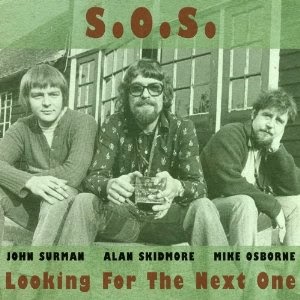
S.O.S., Looking For The Next One, (Cuneiform)
June Tabor/Iain Ballamy/Huw Warren, Quercus, (ECM)
Craig Taborn Trio, Chants, (ECM)
The Whammies, Play The Music Of Steve Lacy Vol. 2, (Drift)
Steven Wilson, The Raven That Refused To Sing and other stories, (K-Scope)
A few words about some of the lesser known discs. Veterans Andy Bey and Dave Burrell had strong efforts, Bey just with his voice and piano, Burrell in a trio with sax and drums that spotlighted his unique ragtime-to-free piano playing. The Gerry Gibbs one is a fine trio CD featuring drummer Gibbs dueling with Ron Carter and Kenny Barron. John Grant is a singer-songwriter with a beautiful baritone who did a chillingly lovely electronic-laced CD in Iceland. Kaja Draksler is a young pianist from Slovenia who made a interesting solo disc and singer Rebecca Martin does an endearing type of jazz-laced folk singing that more people should know about. My favorite songs of the year were Grant's "G.M.F." and Steven Wilson's "The Raven Who Refused To Sing".
First though here are my favorite live performances of the past year:
Charles Lloyd's 75th birthday concert at the Kennedy Center
Dawn Upshaw and the Crash Ensemble at the Kennedy Center
Gregory Porter at the Mid-Atlantic Jazz Festival
Mike Reed's People Places and Things at Bohemian Caverns
Kris Davis' Capricorn Climber at Bohemian Caverns
Janel Leppin's Ensemble Volcanic Ash at Bohemian Caverns
Luciana Souza at Atlas Arts Center
Newspeak Ensemble at Atlas Arts Center
Jack Dejohnette: Special Legends Edition Chicago at the Chicago Jazz Festival
Satoko Fujii Orchestra Chicago at the Chicago Jazz Festival
...and a late add, Matt Wilson's Christmas Tree-O turning seasonal songs of all types every which way at the Atlas a couple of weeks ago
And here are my favorite CDs of the year in alphabetical order:Ralph Alessi/Kris Davis/Tom Rainey/Ingrid Laubrock, LARK, (Skirl)
Tim Berne's Snakeoil, Shadow Man, (ECM)
Andy Bey, The World According To Andy Bey, (HighNote)
Ketil Bjornstad, La Notte, (ECM)
Carla Bley/Andy Sheppard/Steve Swallow, Trios, (ECM)
Dave Burrell, Conception
Gary Burton, Guided Tour, Mack Avenue
Elvis Costello and the Roots, Wise Up Ghost, (Blue Note)
Kris Davis, Capricorn Climber, (Clean Feed)
Miles Davis, Live In Europe 1969 - The Bootleg Series, Vol. 2 (Columbia/Legacy)
Kaja Draksler, The Lives Of Many Others, (Clean Feed)
Shayna Dulberger, Ache and Flutter, (Empty Room Music)
Fire! Orchestra, Exit!, (Rune Grammofon)
Gerry Gibbs, Thrasher Dream Trio, (Whaling City Sound)
John Grant, Pale Green Ghosts, (Partisan)
Mary Halvorson Septet, Imaginary Sea, (Firehouse 12)
David Haney & Bernard Purdie, Selling It Like It Is, (Cadence Jazz)
John Hollenbeck, Songs I Like A Lot, (Suunyside)
William Hooker Quintet, Channels Of Consciousness, (No Business)
Ernie Krivda, At The Tri-C Jazz Fest, (Cadence Jazz)
Marty Krystall Quartet, Moments Magical, (K2B2)
LAMA & Chris Speed, Lamacal, (Clean Feed)
Adam Lane Quartet, Oh Freedom, (CIMP)
Greg Lewis Organ Monk, American Standard
Low, The Invisible Way (Sub Pop)
Rebecca Martin, Twain, (Sunnyside)
Allison Miller's Boom Tic Boom, No Morphine No Lilies, (Foxhaven)
Mostly Other People Do The Killing, Red Hot, (Hot Cup)Chris Potter, The Sirens, (ECM)
Sao Paulo Underground, Beija Flors Velhoie Sujo, (Cuneiform)
Wayne Shorter, Without A Net, (Blue Note)
Wadada Leo Smith & TUMO, Occupy The World, (TUM)
S.O.S., Looking For The Next One, (Cuneiform)
June Tabor/Iain Ballamy/Huw Warren, Quercus, (ECM)
Craig Taborn Trio, Chants, (ECM)
The Whammies, Play The Music Of Steve Lacy Vol. 2, (Drift)
Steven Wilson, The Raven That Refused To Sing and other stories, (K-Scope)
A few words about some of the lesser known discs. Veterans Andy Bey and Dave Burrell had strong efforts, Bey just with his voice and piano, Burrell in a trio with sax and drums that spotlighted his unique ragtime-to-free piano playing. The Gerry Gibbs one is a fine trio CD featuring drummer Gibbs dueling with Ron Carter and Kenny Barron. John Grant is a singer-songwriter with a beautiful baritone who did a chillingly lovely electronic-laced CD in Iceland. Kaja Draksler is a young pianist from Slovenia who made a interesting solo disc and singer Rebecca Martin does an endearing type of jazz-laced folk singing that more people should know about. My favorite songs of the year were Grant's "G.M.F." and Steven Wilson's "The Raven Who Refused To Sing".
Subscribe to:
Posts (Atom)