The past 48 hours have been one of those periods where you're afraid to open your computer or watch any kind of news anywhere. First it was the news that the great actor, Christopher Lee, had died. Then last night I saw that pro wrestling legend Dusty Rhodes had died also. Then this morning came word of Ornette Coleman's passing. I don't know quite what to say. Lee and Coleman were of an age where this wasn't unexpected but still there was no word they were in failing health and you don't want to admit your personal icons will ever die.
I loved Christopher Lee for all his great horror work as in the Hammer Studio Dracula films and The Wicker Man but I was also glad to see him get attention from younger audiences in recent years for acting in the Lord of The Rings trilogy.
I watched wrestling when I was a kid in the days of Bruno Sammartino and Killer Kowalski but I was turned off by the kiddie cartoon antics of Hulk Hogan and the rest of Vince McMahon's 1980's WWWF. Then in 1986 I stumbled on the NWA's syndicated show and I was captivated by all their trash-talking, rough-looking badasses. Above all, one man stood out to me, a guy with curly white hair, the girth of a bus and a line in Southern patter that would put a Baptist preacher to shame. That was The American Dream, Dusty Rhodes. I grew to appreciate the mastery of other performers in that era like Ric Flair and Jim Cornette, but I always held a soft spot for that big, boogalooing tough guy who practically talked in his own language.
Then there's Ornette Coleman, simply one of the most important musicians of the last sixty years, the man who brought true freedom to jazz, the visionary who some reviled and called a fraud when he first emerged but who lived long enough to enjoy the accolades and love that befitted his genius. There hadn't been much activity from him in recent years, and the one recording that came out last year is now looked on as a bit shady, but still it hurts to lose him. I had already prepared my next radio show for next Tuesday but I just junked that for a small Coleman tribute, though I currently have access to far fewer of his recordings than I should.
Showing posts with label jazz. Show all posts
Showing posts with label jazz. Show all posts
Friday, June 12, 2015


Friday, May 29, 2015
Coming June 9th: "The Outer View"
It's now official. I'll be doing a weekly radio show on Radio Fairfax starting June 9th. It'll be called "The Outer View" and it will be on from 2 to 3 PM. I'll be concentrating on various styles and groupings within modern jazz, starting on the first program with large ensembles.
The show is available on cable TV in the Northern Virginia area but also online at www.fcac.org and on TuneIn Radio.
As I said before I hope to use this blog to talk in a general way about some of the artists I'll be playing and the approaches I'll be investigating.
The show is available on cable TV in the Northern Virginia area but also online at www.fcac.org and on TuneIn Radio.
As I said before I hope to use this blog to talk in a general way about some of the artists I'll be playing and the approaches I'll be investigating.
Monday, November 3, 2014
Return To Saturn
.png) |
| Mr. Ra |
In the realm of jazz, there has never been anyone else quite like Sun Ra. He was born Herman Blount in 1917 and his first substantial musical gig was working as an arranger and pianist for the Fletcher Henderson Orchestra in the late 40s. Somewhere in his early life Blount began to draw ideas together from science fiction, history, archeology, philosophy and other disciplines, and combining that with advanced musical concepts he worked on, he emerged as Sun Ra, visitor from the planet Saturn and leader of a big band he called the Arkestra whose music was a dazzling collage of Harlem nightclub swing, show tunes, blues, free jazz screaming and avant-garde concepts, including one of the first uses of synthesizers and electronic keyboards.. The band dressed in homemade costumes with capes and headdresses, danced on stage and played hair-raising, energy-filled music that sounded as futuristic as a spaceship soaring among the planets. His song titles alone sounded they had come from old science fiction pulp magazine: "The Satellites Are Spinning", "The Second Stop Is Jupiter", "We Travel The Spaceways", "Where Is Tomorrow?" "Strange Celestial Road", and "Angels And Demons At Play" being some of the more colorful ones. Ra left this world in 1993 but the Arkestra has carried on without him. At first it was led by the group's legendary tenor player, John Gilmore, but when he passed, the reigns were handed to alto player Marshall Allen who still leads the band to this day.
This year marks Ra's centennial and for the occasion, a group of DC jazz promoters and enthusiasts got together and turned Halloween weekend into a Sun Ra festival with concerts and lectures by various folks keynoted by the Arkestra itself performing at the Lincoln Theater on Halloween night. This was not your average concert. I came out of the subway across the street from the theater an hour before things started and was lucky enough to catch the Arkestra parading down the street to the Lincoln chanting and playing and giving the usual U Street partygoers something different from the usual Halloween revels.
Inside the auditorium, on the movie screen in back of the stage (The Lincoln was once a movie theatre.) Sun Ra: A Joyful Noise, a 1980 documentary on Ra, was playing as the audience filed in. The show itself began with a large group of black women in colorful Afro-futurist regalia slowly marching down the theater aisles holding up a big picture of the great man while one of them slowly intoned "Raaaa!". The music started with an improvised duet by local saxophonist Brian Settles and drummer Jeremy Carlstedt. Then Dr. Tom Porter read Amiri Baraka's introduction to a book of Ra's poetry accompanied by keyboard legend Bernie Worrell on synthesizer. Then, since it was Halloween and a number of folks dressed for the occasion, a brief costume contest was held.
Finally the Arkestra came out resplendent in their usual brightly colored garb and tore into a fiery set of romping big band music full of the dancing fire that had always sparked the band's most thrilling moments. They were enhanced by the presence of three female dancers who came out occasionally, shimmying, shuffling, break dancing, and gliding to the ferocious grooves. The dancers, like everyone else on stage, were dressed in spectacular party gear with veils and capes but there was one curvy lady with gold-braided hair and a gold top and pants whose moves seemed to defy both the laws of gravity and the human anatomy.
This version of the Arkestra is a combination of older and younger faces but it is no mere ghost band. They still play this music, including some of Ra's most familiar tunes, like "Rocket Number Nine", "Saturn" and "Space Is The Place" with amazing energy and heat. I don't know the names of most of the current members but as always, there is Marshall Allen. Allen joined Ra back in 1957 and is now 90 years old. It would be a gross understatement to say he plays well for a man his age. He is playing extraordinarily for a man half his age, bellowing cascades of freakish notes out of his horn like fireworks. His solo on "Cocktails For Two", alternating the screaming with smooth, old-school melody, was amazing. He also played an EWI wind synthesizer, an electronic instrument that can sound horribly cheesy but which Marshall turned into a portable theremin, using it to create booming and swooping effects which fit right into the band's cosmic cacophony.
Bernie Worrell added his funkified keyboard squelching to a couple of numbers and "Space Is The Place" served as the backdrop for a fashion show displaying the works of a local clothing designer who had actually made capes for Ra in the past. The show ended with the band playing the grand, swooping waltz, "Love In Outer Space" as they left the stage and marched through the aisles before going backstage.
Sun Ra's universe is a bit eccentric for some tastes but he has come to be generally recognized now as a visionary musician and philosopher who created a towering body of work that merged the past and future of jazz. His influence has been passed down to many and the musicians who are currently in the Arkestra carry on his cosmic message impressively.
For those of you not familiar with any of this music, here are some video samples:
First, part of an interview with Ra that shows bits of his philosophy. This was done in Helsinki, Finland in 1971 and is interspersed with clips of the band in performance:
Then the Arkestra makes a very rare appearance on American television in 1989 on the show "Night Music". Marshall Allen takes the first sax solo and the second is by John Gilmore, an influence on John Coltrane:
Finally a bit of the current-day Arkestra led by Allen. They are doing "Angels At Demons At Play" at a 2012 festival in Poschiavo, Switzerland.
Tuesday, October 21, 2014
Ran Blake
.png)
Blake was born in Springfield, MA in 1935 and began his musical career in the late 1950's in New York City. In 1959 he met educator and composer Gunther Schuller who became his mentor and introduced him to the concept of Third Stream Music, a hybrid genre that draws equally from the worlds of jazz and classical music. Schuller helped get Blake a position teaching at the New England Conservatory and he eventually became the Chair of the Third Stream Department, a position he still holds though the school's name has changed to the Contemporary Improvisation Department. Blake has taught and influenced many musicians, like Don Byron and Matthew Shipp, in that capacity.
In addition to all this he has enjoyed a long performing and recording career playing music that draws from inspirations like European folk music, gospel, classical and film noir as well as classic jazz sources. His playing is measured and deliberate, single, icy notes alternating with dissonant chords and rich bursts of melody. This creates a musical universe of woozy darkness that creeps along with the dread of an Edgar Allan Poe short story. Here is he working his magic on "Over The Rainbow".
Blake has always worked in small configurations, mostly solo or duo with saxophonists or vocalists though of late he has been working with a guitarist, David "Knife" Fabris. In the sax world, he has worked with melodic, big-toned players who contrasted well with his sparse frameworks such as Clifford Jordan, Houston Person, Ricky Ford, Steve Lacy and Anthony Braxton. The vocalists though have been his most memorable foils. The sound of a haunting female voice singing against Blake's dissonant chords is mesmerizing. Over the years he has worked with singers like Christine Correa, Dominique Eade, Sara Serpa and Chris Connor but his landmark statement came in 1962 when he recorded the album The Newest Sound Around with socialist Jeanne Lee. Lee's husky, powerful voice was the perfect compliment to Blake and their work together still sounds like nothing else even after all these years.
This is a rare 1963 clip from French television of Lee and Blake performing "Something's Coming" from West Side Story.
And this is a more recent piano-voice pairing with the Portuguese-born Sara Serpa. The song is Blake's composition, "Vanguard".
Blake's repertoire over the years has come from everywhere, film themes, traditional gospel, folk songs and the Great American Songboook. He has recorded full-length ttributes to George Gershwin, Duke Ellington and Horace Silver and select compositions of jazz legends like George Russell, Stan Kenton and Ornette Coleman. He's also recorded many of his own pieces over the years, none more haunting than "The Short Life Of Barbara Monk". During his early days in New York Blake hung around Thelonious Monk quite a bit to the point where he actually baby sat for his two children, Barbara and T.S. Barbara died of breast cancer in 1983 aand afterwards, Blake wrote a composition based on a dream he had of her ice skating as a child. That piece sounds like a theme from a lost film noir, sweet and childlike but filled with an uncertain dread. This version is from an album on the Soul Note label named after the piece. It's the only record I've ever seen where Blake recorded with a full quartet. Ricky Ford is the hard-nosed tenor saxophonist.
Saturday, October 11, 2014
Julie (Driscoll) Tippetts
.jpg) |
| Julie Tippetts, jazz vocalist |
.png) |
| Julie Driscoll, pop singer |
In 1969 she left Auger to pursue a solo career but on her own she went in a different direction, leaving the pop songs behind for self-written material that merged folk with progressive jazz as shown on her solo records, 1971's 1969 and 1974's Sunset Glow. This is "Those That We Love" from 1969.
Travelling in these circles she met up with jazz pianist Keith Tippett and began to contribute both vocals and lyrics to his groups like the improvising quartet, Ovary Lodge, and the 50-piece jazz-rock orchestra, Centipede.
Eventually Driscoll and Tippett were married and as Julie Tippetts, the singer has continued to work in the jazz/improv field for the last 40 years, performing with her husband in various small and large groups as well as working with others like pianist-composer Carla Bley, saxophonist Martin Archer, fellow free vocalists Maggie Nicols and Phil Minton and the free improvisation group, the Spontaneous Music Ensemble. She's also made occasional returns to the rock world, a reunion album with Brian Auger in 1978 and a collaboration with Working Week, a politically progressive rock-soul-jazz band in 1984. In 1992, she even re-recorded her old hit, "This Wheel's On Fire" as the theme song for the TV show Absolutely Fabulous.
Today she is recognized as a major figure in the European jazz world, her slinky, elastic voice immediately distinctive whether chirping over her husband's tinkling piano or blasting over a roaring big band.
This is a clip of the Tippetts performing in 2007 with saxophonist Paul Dunmall. I apologize for the fuzzy visuals but this was the best clip I found to display the range and expressiveness of Julie's voice.
And this presents the Tippetts along with South African drummer Louis Moholo-Moholo and an Italian big band, Canto General, performing an excerpt from the Centipede magnum opus, "Septober Energy". Keith wrote the music and Julie wrote the lyrics. The soprano sax player duetting with Julie is Roberto Ottaviano.
Monday, September 8, 2014
My All Jazz Weekend
I'm still in the process of figuring exactly how I want to revamp this blog but in the meantime I wanted to get down my impressions of all the music I saw this weekend:
I retired from my job on August 29 and although I didn't plan it that way I ended up celebrating after a fashion by seeing live music all this weekend, something I wouldn't have dared done while I was working.
Friday I went to a concert in the Capitol Bop DC Jazz Loft series, something that's been going on for a couple of years but which I had never attended before at their home base in DC's Northeast market/warehouse district. The lead performer was Todd Marcus, a bass clarinetist who plays that instrument with amazing facility and skill and led a quartet that also featured a fire-breathing saxophonist in Gregory Tardy.
The eye opener for me at that show though was the opening act, pianist Dwayne Adell who was amazing. Adell plays with astonishing speed and dexterity in a style that combines stride bass, classical ornamentation and gravity coming off like some mad cross between Art Tatum and McCoy Tyner. His hands flew along the keyboard at 100 miles an hour with improvisations that seemed incredibly complex but always had weight, drive and logic to them. Even more impressive he chose to do this on mostly standard fare like "Stella By Starlight" and a Jobim bossa nova from Black Orpheus. The man's playing was scary.
Saturday I went to the Rosslyn Jazz Festival, an outdoor event that usually comes up with one or two acts every year that I want to see. This year the heat was so intense I couldn't hang for the whole show but I did manage to see Brian Carpenter's Ghost Train Orchestra, a unit of New York players that plays the music of jazz bands from the 20's and 30's. They dig deep into the repertoire unearting pieces by the likes of Tiny Parham, Fess Williams and Don Redman and play the work with modern panache and a touch of anarchy coming from banjo player Brandon Seabrook and a tuba player and violinist whose names I didn't catch.
On their most recent CD the orchestra went up the timeline a bit and played "novelty" pieces from the 30's and 40's by composers like Raymond Scott, Reginald Forsyth and Alec Wilder. I was a little disappointed that they didn't pull out any of that work live but what they did play went down nicely.
That brings us to Sunday and a show I had been circling ever since I heard about it months ago, the
Ingrid Laubrock Quintet at Bohemian Caverns. Laubrock is a German-born player who spent a few years as part of the London scene before moving to New York. I'd seen her twice before in groups led by Anthony Braxton and Kris Davis and was impressed both times by her mastery of all facets of the tenor saxophone. Here she was the leader and her composing turned out to be ferocious as her playing.
The group consisted of herself on tenor sax, Tim Berne on alto sax, Ben Gerstein on trombone, Dan Peck on tuba and Tom Rainey on drums. Laubrock's work uses a wide spectrum of sound ranging from high-pitched squeals to static low drones. She often broke down the band into subunits of two or three with the two saxophones bubbling together or Gerstein blaring and roaring all over Rainey's endless carpet of rolling rhythms, something he created as often with his bare hands as his drum sticks. Berne played lovely flowing lines with his usual energy, Peck was constantly keeping the bass part going and Gerstein made hair-raising sounds, especially when he attached a reed to his trombone mouthpiece and made very un-trombone like wails, but the most commanding figure was Laubrock herself. She has a unqie way of playing that utilizes barks, whinnies and other wild sounds, sometimes even taking off the entire tenor mouthpiece and blowing right into the metal horn. She particularly sounds simpatico with Rainey, who it so happens is her husband. Their rattling and thumping sounded like a hailstorm. Then in the middle of all that sturm und drang she laid back and played a stretch of lovely pure melody thsat sounded like the sun coming out after a downpour.
The first set was taken up completely by a suite that traveled all over the place and the second had some bits of time playing, ending up in a parade march rhythm playedjmostly straight by Rainey and the brass while the saxes flew around frantically throwing monkey wrenches into the groove.
Ingrid Laubrock is one of the most exciting composers and saxophonists around today and Tom Rainey is a criminally underrated drummer.
I retired from my job on August 29 and although I didn't plan it that way I ended up celebrating after a fashion by seeing live music all this weekend, something I wouldn't have dared done while I was working.
Friday I went to a concert in the Capitol Bop DC Jazz Loft series, something that's been going on for a couple of years but which I had never attended before at their home base in DC's Northeast market/warehouse district. The lead performer was Todd Marcus, a bass clarinetist who plays that instrument with amazing facility and skill and led a quartet that also featured a fire-breathing saxophonist in Gregory Tardy.
The eye opener for me at that show though was the opening act, pianist Dwayne Adell who was amazing. Adell plays with astonishing speed and dexterity in a style that combines stride bass, classical ornamentation and gravity coming off like some mad cross between Art Tatum and McCoy Tyner. His hands flew along the keyboard at 100 miles an hour with improvisations that seemed incredibly complex but always had weight, drive and logic to them. Even more impressive he chose to do this on mostly standard fare like "Stella By Starlight" and a Jobim bossa nova from Black Orpheus. The man's playing was scary.
Saturday I went to the Rosslyn Jazz Festival, an outdoor event that usually comes up with one or two acts every year that I want to see. This year the heat was so intense I couldn't hang for the whole show but I did manage to see Brian Carpenter's Ghost Train Orchestra, a unit of New York players that plays the music of jazz bands from the 20's and 30's. They dig deep into the repertoire unearting pieces by the likes of Tiny Parham, Fess Williams and Don Redman and play the work with modern panache and a touch of anarchy coming from banjo player Brandon Seabrook and a tuba player and violinist whose names I didn't catch.
On their most recent CD the orchestra went up the timeline a bit and played "novelty" pieces from the 30's and 40's by composers like Raymond Scott, Reginald Forsyth and Alec Wilder. I was a little disappointed that they didn't pull out any of that work live but what they did play went down nicely.
That brings us to Sunday and a show I had been circling ever since I heard about it months ago, the
 |
| Laubrock and Rainey |
The group consisted of herself on tenor sax, Tim Berne on alto sax, Ben Gerstein on trombone, Dan Peck on tuba and Tom Rainey on drums. Laubrock's work uses a wide spectrum of sound ranging from high-pitched squeals to static low drones. She often broke down the band into subunits of two or three with the two saxophones bubbling together or Gerstein blaring and roaring all over Rainey's endless carpet of rolling rhythms, something he created as often with his bare hands as his drum sticks. Berne played lovely flowing lines with his usual energy, Peck was constantly keeping the bass part going and Gerstein made hair-raising sounds, especially when he attached a reed to his trombone mouthpiece and made very un-trombone like wails, but the most commanding figure was Laubrock herself. She has a unqie way of playing that utilizes barks, whinnies and other wild sounds, sometimes even taking off the entire tenor mouthpiece and blowing right into the metal horn. She particularly sounds simpatico with Rainey, who it so happens is her husband. Their rattling and thumping sounded like a hailstorm. Then in the middle of all that sturm und drang she laid back and played a stretch of lovely pure melody thsat sounded like the sun coming out after a downpour.
The first set was taken up completely by a suite that traveled all over the place and the second had some bits of time playing, ending up in a parade march rhythm playedjmostly straight by Rainey and the brass while the saxes flew around frantically throwing monkey wrenches into the groove.
Ingrid Laubrock is one of the most exciting composers and saxophonists around today and Tom Rainey is a criminally underrated drummer.
Monday, February 17, 2014
Stephan Crump's Rosetta Trio

It's always fun to go to a concert not knowing quite what to expect and being pleasantly surprised about what you hear. That was my response to seeing Stephan Crump's Rosetta Trio at Bohemian Caverns last night.
The trio consists of Crump on bass, Liberty Ellman on acoustic guitar and Jamie Fox on electric guitar. Before last night I knew Crump from Vijay Iyer's trio, had heard Ellman's name in a couple of places and didn't know Fox at all. Together they played jazz that was flowing and rhythmic in complex lines without distortion or effects. They could be delicate or swing mercilessly. I was reminded of other modern guitar sounds like the clean chording of the late Jim Hall and the thoughtfulness of Ralph Towner. On a lazy blues called "Memphis" Fox even bent a few notes in the direction of B.B. King.
All three men had ample chance to show what they could in solo turns and Crump particularly impressed me with his drive and imagination. Not only does he have three CDs out with this group, he's also done a duo disc with a very different sort of guitarist, Mary Halvorson. I'll love to hear how he deals with her abrasive chords and melodies.
You don;t hear anything about the Rosetta Trio, even in modern "out" jazz circles but they are definitely worth investigating, just one great example of the infinite beauties found in the jazz world today.
Tuesday, February 11, 2014
The Jazz World: The Cool
The Birth Of The Cool
In the 1950's there was continued investigation into the idea of exploring advanced harmonies and textures in jazz music. The most significant attempt at this came from a group of young musicians who met together repeatedly at the New York apartment of arranger and composer Gil Evans in the late 1940's. These men, who included Miles Davis, John Lewis, Lee Konitz, Max Roach and Gerry Mulligan, looked at bringing in instruments not used in jazz often like French horn and tuba to create a larger unified sound and took cues from the work of French impressionist composers like Ravel and Debussy. What emerged was a style of jazz that worked at a lower intensity than bebop but was still sophisticated and swinging, a style that came to be known as "Cool Jazz". The results of this work were recorded by a nine piece group under the leadership of Miles Davis, sessions that eventually came out as an album entitled Birth Of The Cool.
This is a sample of that wotrk, a Gerry Mulligan composition called "Jeru":
Gerry Mulligan
I'll talk about Miles Davis and Gil Evans in later posts but for now I want to concenrtnate on Gerry Mulligan. Mulligan was known first as an arranger but he later gained fame for his effortless way with the unwieldy baritone sax. He took the Birth of the Cool ideas to the West Coast where an entire movement of cerebral, easy-swinging players would emerge, men like Shorty Rogers, Art Farmer, Chet Baker, Chico Hamilton, and Jim Hall.
Mulligan's biggest innovation was in putting together a small group without a piano, just two horns and a rhythm section. Jazz without the harmonic bridge of a piano was virtually unheard of at the time but Mulligan pitting the low sound of his baritone against the trumpets of either Baker or Farmer or the valve trombone of Bob Brookmeyer gave his band's sound a flowing freedom that would resonate in different forms through later years. Here is a 1957 Mulligan quartet with Brookmeyer playing "Open Country":
Jimmy Giuffre
Jimmy Giuffre was not part of the "Birth of the Cool" sessions but he had ideas along the same lines. Adept at a number of reed instruments, he first played and wrote for big bands, most famously composing the saxophone section workout "Four Brothers" for the Woody Herman Orchestra but he soon developed his own concept of quiet, unusual instrumental combinations, working in trios with bass and either (again) Bob Brookmeyer's trombone or Jim Hall's guitar. He did a lot of work with simple blues and folk forms in the Fifties before eventually going more abstract in the mid-60's. Here he is on various reeds with Hall and Jim Atlas on bass in 1957 doing his composition "The Train and The River".
The Modern Jazz Quartet
John Lewis was part of the "Cool" sessions but his main interests turned out to come from the past, the baroque music of Bach and his contemporaries. Lewis had been pianist in Dizzy Gillespie's big band and during their concerts, he and the rest of the rhythm section, Milt Jackson on vibraphone, Ray Brown on bass and Kenny Clarke on drums, would play a few numbers to give the horn players a break. Eventually that quartet would go out on its own as the Modern Jazz Quartet with Percy Heath replacing Brown and Connie Kay replacing Clarke. The group was originally co-led by Lewis and Jackson but eventually Lewis took over the sole reigns and began to explore in depth merging classical music and jazz. The polite elegance of his piano and the bluesy gravity of Jackson's vibes made a stark but sexy contrast, distinctive enough to make the Modern Jazz Quartet last through five decades, playing all over the world, collaborating with symphony orchestras and in their own way, presenting an image of the black jazz musician as a dignified serious artist, something that looking back was a powerful statement for its time. This is a studio recording of one of their most popular tunes, Lewis' "Django", a piece that strongly states their classics/jazz dichotomy.
Dave Brubeck
I wrote a post about Brubeck when he passed away but I can't leave him out here. He was another musician who brought classical influences to jazz, experimenting with advanced harmonies and unusual time signatures. After trying out an octet in the late 40's, he began a partnership with alto saxophonist Paul Desmond that lasted over twenty years. Brubeck's driving, angular playing mixed with Desmond's sighing, liquid sax was a perfectly balanced combination and with Eugene Wright and Joe Morello in the rhythm section they were the most popular jazz group of their day, even managing a Top 10 pop hit in "Take Five". After the quartet broke up in 1967 Brubeck continued to work with other quartets as well as composing extended orchestral works and played almost up until his death in 2012. Some people in the old days complained that Brubeck's music didn't swing enough but by the time he died he was universally regarded as one of the finest musicians in the music's history. Here is the classic Brubeck quartet doing "Blue Rondo A La Turk" on one of Hugh Hefner's Playboy TV shows. Cecil Taylor has always cited Brubeck as a favorite player. His solo here clues you in as to why.
In the 1950's there was continued investigation into the idea of exploring advanced harmonies and textures in jazz music. The most significant attempt at this came from a group of young musicians who met together repeatedly at the New York apartment of arranger and composer Gil Evans in the late 1940's. These men, who included Miles Davis, John Lewis, Lee Konitz, Max Roach and Gerry Mulligan, looked at bringing in instruments not used in jazz often like French horn and tuba to create a larger unified sound and took cues from the work of French impressionist composers like Ravel and Debussy. What emerged was a style of jazz that worked at a lower intensity than bebop but was still sophisticated and swinging, a style that came to be known as "Cool Jazz". The results of this work were recorded by a nine piece group under the leadership of Miles Davis, sessions that eventually came out as an album entitled Birth Of The Cool.
This is a sample of that wotrk, a Gerry Mulligan composition called "Jeru":
Gerry Mulligan
I'll talk about Miles Davis and Gil Evans in later posts but for now I want to concenrtnate on Gerry Mulligan. Mulligan was known first as an arranger but he later gained fame for his effortless way with the unwieldy baritone sax. He took the Birth of the Cool ideas to the West Coast where an entire movement of cerebral, easy-swinging players would emerge, men like Shorty Rogers, Art Farmer, Chet Baker, Chico Hamilton, and Jim Hall.
Mulligan's biggest innovation was in putting together a small group without a piano, just two horns and a rhythm section. Jazz without the harmonic bridge of a piano was virtually unheard of at the time but Mulligan pitting the low sound of his baritone against the trumpets of either Baker or Farmer or the valve trombone of Bob Brookmeyer gave his band's sound a flowing freedom that would resonate in different forms through later years. Here is a 1957 Mulligan quartet with Brookmeyer playing "Open Country":
Jimmy Giuffre
Jimmy Giuffre was not part of the "Birth of the Cool" sessions but he had ideas along the same lines. Adept at a number of reed instruments, he first played and wrote for big bands, most famously composing the saxophone section workout "Four Brothers" for the Woody Herman Orchestra but he soon developed his own concept of quiet, unusual instrumental combinations, working in trios with bass and either (again) Bob Brookmeyer's trombone or Jim Hall's guitar. He did a lot of work with simple blues and folk forms in the Fifties before eventually going more abstract in the mid-60's. Here he is on various reeds with Hall and Jim Atlas on bass in 1957 doing his composition "The Train and The River".
The Modern Jazz Quartet
John Lewis was part of the "Cool" sessions but his main interests turned out to come from the past, the baroque music of Bach and his contemporaries. Lewis had been pianist in Dizzy Gillespie's big band and during their concerts, he and the rest of the rhythm section, Milt Jackson on vibraphone, Ray Brown on bass and Kenny Clarke on drums, would play a few numbers to give the horn players a break. Eventually that quartet would go out on its own as the Modern Jazz Quartet with Percy Heath replacing Brown and Connie Kay replacing Clarke. The group was originally co-led by Lewis and Jackson but eventually Lewis took over the sole reigns and began to explore in depth merging classical music and jazz. The polite elegance of his piano and the bluesy gravity of Jackson's vibes made a stark but sexy contrast, distinctive enough to make the Modern Jazz Quartet last through five decades, playing all over the world, collaborating with symphony orchestras and in their own way, presenting an image of the black jazz musician as a dignified serious artist, something that looking back was a powerful statement for its time. This is a studio recording of one of their most popular tunes, Lewis' "Django", a piece that strongly states their classics/jazz dichotomy.
Dave Brubeck
I wrote a post about Brubeck when he passed away but I can't leave him out here. He was another musician who brought classical influences to jazz, experimenting with advanced harmonies and unusual time signatures. After trying out an octet in the late 40's, he began a partnership with alto saxophonist Paul Desmond that lasted over twenty years. Brubeck's driving, angular playing mixed with Desmond's sighing, liquid sax was a perfectly balanced combination and with Eugene Wright and Joe Morello in the rhythm section they were the most popular jazz group of their day, even managing a Top 10 pop hit in "Take Five". After the quartet broke up in 1967 Brubeck continued to work with other quartets as well as composing extended orchestral works and played almost up until his death in 2012. Some people in the old days complained that Brubeck's music didn't swing enough but by the time he died he was universally regarded as one of the finest musicians in the music's history. Here is the classic Brubeck quartet doing "Blue Rondo A La Turk" on one of Hugh Hefner's Playboy TV shows. Cecil Taylor has always cited Brubeck as a favorite player. His solo here clues you in as to why.
Sunday, January 26, 2014
The Jazz World: Composers and Theorists
Moving on to a few more of the music's great post-war composers, the first stop has to be my single favorite jazz musician...
Charles Mingus
Mingus was a singular figure in an universe full of them, a man who wrote music with both classical ambitions and gutbucket passions, who could turn the blues into all manner of soaring, aching shapes. Much of his work reflected his environment, deep-souled love songs, tributes to past masters like Lester Young, tone poems that asked big questions about life, and works that dealt with the civil rights struggles of the Fifties and Sixties in pieces like "Fables Of Faubus" and "Meditations On A Pair Of Wire Cutters". No matter what the subject matter, Mingus' bands with his booming bass in the lead, swung murderously. This is one of his greatest works, 10 minutes of soul shouting on the topic of prehistoric man, "Pithecanthropus Erectus":
Mingus had the benefit of having some extraordinary musicians in his band over his career like saxophonists Clifford Jordan, Eric Dolphy and George Adams, trumpeters Johnny Coles and Jack Walrath, pianists Jaki Byard and Don Pullen and his almost constant rhythm mate, drummer Dannie Richmond. This is a live clip of a 1964 Mingus group that included Coles, Byard, Jordan and Dolphy doing the Ellington-Strayhorn classic, "Take The 'A' Train. The most notable parts are Byard's romping stride piano spot and Dolphy beaming in from another planet on bass clarinet:
Lennie Tristano
Lennie Tristano was a blind pianist who emerged in the late 40's with a methodology akin to bebop. He rolled out long streams of improvisations on the chords of standard tunes but with nods in the direction of Johann Sebastian Bach and atonality, creating more openly experimental music than what Parker, Gillespie and their cohorts were doing. A number of great musicians studied with Tristano, the most prominent being saxophonists Lee Konitz and Warne Marsh. In 1949, they were part of a Tristano recording session of pieces called "Intuition" and "Digression" which were completely improvised with no use of prearranged melodies and harmonies. These works are now considered the first examples of Free Jazz.
The Tristano clip below requires a little background. Look Up and Live was an anthology program of religious drams that ran Sunday morning on CBS from 1954 to 1979. In the summer of 1964, as the host explains, they took a break to explore the performing arts, which in this case meant, filming Tristano's quintet, including Konitz and Marsh, during a gig at New York's Half Note club. There is an attempt during the show to tie the music to religious/philosophical themes, but think about what's being presented here. Can you imagine any sort of religious broadcast today just letting a jazz group play on air for a half-hour? For that matter, can you imagine any TV show today doing such a thing? This was one of the beautiful by-products of Jazz being part of mainstream adult culture way back when:
George Russell
George Russell's major contribution to Jazz was not a composition but a theory. "The Lydian Chromatic Concept of Tonal Organization for Improvisation" proposed a new musical system where chords replaced scales as the basis for improvisation giving musicians a greater range of options to play with. Russell gives a thumbnail sketch of his ideas in this interview excerpt from a 1958 TV show, The Subject Is Jazz:
Russell's work would be absorbed by a number of restless young musical minds including Miles Davis, John Coltrane and Ornette Coleman, which right there makes him an influence on the next several decades of Jazz. He led small groups through the 50's, working with players like Eric Dolphy and Don Ellis, and spent some time in Europe during the 60's, making the acquaintance along the way of a group of young Norwegian musicians including Jan Garbarek and Terje Rypdal who would go on to long and productive careers. Russell's later composing stretched to longer form works that included electronics, rock rhythms and even lashings of go-go and funk. I couldn't find a copy to post here but he did a version of "You Are My Sunshine" with Sheila Jordan on vocals that is amazing.
This is one of Russell's classic early compositions, "Ezz-thetic":
And this is an excerpt from one of his later works, "Listen To The Silence", featuring members of his Norwegian crew like Garbarek, Rypdal and Bobo Stenson.
Charles Mingus
Mingus was a singular figure in an universe full of them, a man who wrote music with both classical ambitions and gutbucket passions, who could turn the blues into all manner of soaring, aching shapes. Much of his work reflected his environment, deep-souled love songs, tributes to past masters like Lester Young, tone poems that asked big questions about life, and works that dealt with the civil rights struggles of the Fifties and Sixties in pieces like "Fables Of Faubus" and "Meditations On A Pair Of Wire Cutters". No matter what the subject matter, Mingus' bands with his booming bass in the lead, swung murderously. This is one of his greatest works, 10 minutes of soul shouting on the topic of prehistoric man, "Pithecanthropus Erectus":
Mingus had the benefit of having some extraordinary musicians in his band over his career like saxophonists Clifford Jordan, Eric Dolphy and George Adams, trumpeters Johnny Coles and Jack Walrath, pianists Jaki Byard and Don Pullen and his almost constant rhythm mate, drummer Dannie Richmond. This is a live clip of a 1964 Mingus group that included Coles, Byard, Jordan and Dolphy doing the Ellington-Strayhorn classic, "Take The 'A' Train. The most notable parts are Byard's romping stride piano spot and Dolphy beaming in from another planet on bass clarinet:
Lennie Tristano
Lennie Tristano was a blind pianist who emerged in the late 40's with a methodology akin to bebop. He rolled out long streams of improvisations on the chords of standard tunes but with nods in the direction of Johann Sebastian Bach and atonality, creating more openly experimental music than what Parker, Gillespie and their cohorts were doing. A number of great musicians studied with Tristano, the most prominent being saxophonists Lee Konitz and Warne Marsh. In 1949, they were part of a Tristano recording session of pieces called "Intuition" and "Digression" which were completely improvised with no use of prearranged melodies and harmonies. These works are now considered the first examples of Free Jazz.
The Tristano clip below requires a little background. Look Up and Live was an anthology program of religious drams that ran Sunday morning on CBS from 1954 to 1979. In the summer of 1964, as the host explains, they took a break to explore the performing arts, which in this case meant, filming Tristano's quintet, including Konitz and Marsh, during a gig at New York's Half Note club. There is an attempt during the show to tie the music to religious/philosophical themes, but think about what's being presented here. Can you imagine any sort of religious broadcast today just letting a jazz group play on air for a half-hour? For that matter, can you imagine any TV show today doing such a thing? This was one of the beautiful by-products of Jazz being part of mainstream adult culture way back when:
George Russell
George Russell's major contribution to Jazz was not a composition but a theory. "The Lydian Chromatic Concept of Tonal Organization for Improvisation" proposed a new musical system where chords replaced scales as the basis for improvisation giving musicians a greater range of options to play with. Russell gives a thumbnail sketch of his ideas in this interview excerpt from a 1958 TV show, The Subject Is Jazz:
Russell's work would be absorbed by a number of restless young musical minds including Miles Davis, John Coltrane and Ornette Coleman, which right there makes him an influence on the next several decades of Jazz. He led small groups through the 50's, working with players like Eric Dolphy and Don Ellis, and spent some time in Europe during the 60's, making the acquaintance along the way of a group of young Norwegian musicians including Jan Garbarek and Terje Rypdal who would go on to long and productive careers. Russell's later composing stretched to longer form works that included electronics, rock rhythms and even lashings of go-go and funk. I couldn't find a copy to post here but he did a version of "You Are My Sunshine" with Sheila Jordan on vocals that is amazing.
This is one of Russell's classic early compositions, "Ezz-thetic":
And this is an excerpt from one of his later works, "Listen To The Silence", featuring members of his Norwegian crew like Garbarek, Rypdal and Bobo Stenson.
Wednesday, January 1, 2014
Favorite Music Of 2013
This is the first year in a long time where I have not had to assemble any kind of Top 10 CD list for Cadence, so I've decided to put one up here. Since I've doing it on my own I'm going by my own rules and making this a list of my favorite CDs released in 2013 whether they're new or a reissue and regardless of genre. Most of these are jazz releases but there's also some prog rock and by way of Elvis Costello, a little hip-hop. I don't have the resources that go into a lot of other lists I've seen online and in print. I don't get promo CDs directly like professional critics. I'm basically limited to the stuff Cadence sends me and what I can buy on my own, so there are a few of the same discs everybody else is listing here and some that no one seems to have discovered.
First though here are my favorite live performances of the past year:
Charles Lloyd's 75th birthday concert at the Kennedy Center
Dawn Upshaw and the Crash Ensemble at the Kennedy Center
Gregory Porter at the Mid-Atlantic Jazz Festival
Mike Reed's People Places and Things at Bohemian Caverns
Kris Davis' Capricorn Climber at Bohemian Caverns
Janel Leppin's Ensemble Volcanic Ash at Bohemian Caverns
Luciana Souza at Atlas Arts Center
Newspeak Ensemble at Atlas Arts Center
Jack Dejohnette: Special Legends Edition Chicago at the Chicago Jazz Festival
Satoko Fujii Orchestra Chicago at the Chicago Jazz Festival
...and a late add, Matt Wilson's Christmas Tree-O turning seasonal songs of all types every which way at the Atlas a couple of weeks ago
 And here are my favorite CDs of the year in alphabetical order:
Ralph Alessi/Kris Davis/Tom Rainey/Ingrid Laubrock, LARK, (Skirl)
Tim Berne's Snakeoil, Shadow Man, (ECM)
Andy Bey, The World According To Andy Bey, (HighNote)
Ketil Bjornstad, La Notte, (ECM)
Carla Bley/Andy Sheppard/Steve Swallow, Trios, (ECM)
Dave Burrell, Conception
Gary Burton, Guided Tour, Mack Avenue
Elvis Costello and the Roots, Wise Up Ghost, (Blue Note)
Kris Davis, Capricorn Climber, (Clean Feed)
Miles Davis, Live In Europe 1969 - The Bootleg Series, Vol. 2 (Columbia/Legacy)
Kaja Draksler, The Lives Of Many Others, (Clean Feed)
Shayna Dulberger, Ache and Flutter, (Empty Room Music)
Fire! Orchestra, Exit!, (Rune Grammofon)
 Gerry Gibbs, Thrasher Dream Trio, (Whaling City Sound)
John Grant, Pale Green Ghosts, (Partisan)
Mary Halvorson Septet, Imaginary Sea, (Firehouse 12)
David Haney & Bernard Purdie, Selling It Like It Is, (Cadence Jazz)
John Hollenbeck, Songs I Like A Lot, (Suunyside)
William Hooker Quintet, Channels Of Consciousness, (No Business)
Ernie Krivda, At The Tri-C Jazz Fest, (Cadence Jazz)
Marty Krystall Quartet, Moments Magical, (K2B2)
LAMA & Chris Speed, Lamacal, (Clean Feed)
Adam Lane Quartet, Oh Freedom, (CIMP)
Greg Lewis Organ Monk, American Standard
Low, The Invisible Way (Sub Pop)
Rebecca Martin, Twain, (Sunnyside)
Allison Miller's Boom Tic Boom, No Morphine No Lilies, (Foxhaven)
Billy Mintz, Mintz Quartet, (Thirteeneth Note)
 Mostly Other People Do The Killing, Red Hot, (Hot Cup)
Chris Potter, The Sirens, (ECM)
Sao Paulo Underground, Beija Flors Velhoie Sujo, (Cuneiform)
Wayne Shorter, Without A Net, (Blue Note)
Wadada Leo Smith & TUMO, Occupy The World, (TUM)
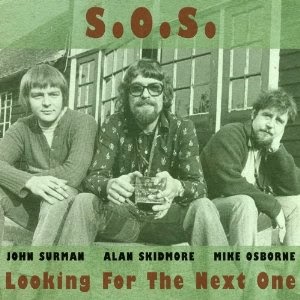
S.O.S., Looking For The Next One, (Cuneiform)
June Tabor/Iain Ballamy/Huw Warren, Quercus, (ECM)
Craig Taborn Trio, Chants, (ECM)
The Whammies, Play The Music Of Steve Lacy Vol. 2, (Drift)
Steven Wilson, The Raven That Refused To Sing and other stories, (K-Scope)

A few words about some of the lesser known discs. Veterans Andy Bey and Dave Burrell had strong efforts, Bey just with his voice and piano, Burrell in a trio with sax and drums that spotlighted his unique ragtime-to-free piano playing. The Gerry Gibbs one is a fine trio CD featuring drummer Gibbs dueling with Ron Carter and Kenny Barron. John Grant is a singer-songwriter with a beautiful baritone who did a chillingly lovely electronic-laced CD in Iceland. Kaja Draksler is a young pianist from Slovenia who made a interesting solo disc and singer Rebecca Martin does an endearing type of jazz-laced folk singing that more people should know about. My favorite songs of the year were Grant's "G.M.F." and Steven Wilson's "The Raven Who Refused To Sing".
First though here are my favorite live performances of the past year:
Charles Lloyd's 75th birthday concert at the Kennedy Center
Dawn Upshaw and the Crash Ensemble at the Kennedy Center
Gregory Porter at the Mid-Atlantic Jazz Festival
Mike Reed's People Places and Things at Bohemian Caverns
Kris Davis' Capricorn Climber at Bohemian Caverns
Janel Leppin's Ensemble Volcanic Ash at Bohemian Caverns
Luciana Souza at Atlas Arts Center
Newspeak Ensemble at Atlas Arts Center
Jack Dejohnette: Special Legends Edition Chicago at the Chicago Jazz Festival
Satoko Fujii Orchestra Chicago at the Chicago Jazz Festival
...and a late add, Matt Wilson's Christmas Tree-O turning seasonal songs of all types every which way at the Atlas a couple of weeks ago
 And here are my favorite CDs of the year in alphabetical order:
Ralph Alessi/Kris Davis/Tom Rainey/Ingrid Laubrock, LARK, (Skirl)
Tim Berne's Snakeoil, Shadow Man, (ECM)
Andy Bey, The World According To Andy Bey, (HighNote)
Ketil Bjornstad, La Notte, (ECM)
Carla Bley/Andy Sheppard/Steve Swallow, Trios, (ECM)
Dave Burrell, Conception
Gary Burton, Guided Tour, Mack Avenue
Elvis Costello and the Roots, Wise Up Ghost, (Blue Note)
Kris Davis, Capricorn Climber, (Clean Feed)
Miles Davis, Live In Europe 1969 - The Bootleg Series, Vol. 2 (Columbia/Legacy)
Kaja Draksler, The Lives Of Many Others, (Clean Feed)
Shayna Dulberger, Ache and Flutter, (Empty Room Music)
Fire! Orchestra, Exit!, (Rune Grammofon)

John Grant, Pale Green Ghosts, (Partisan)
Mary Halvorson Septet, Imaginary Sea, (Firehouse 12)
David Haney & Bernard Purdie, Selling It Like It Is, (Cadence Jazz)
John Hollenbeck, Songs I Like A Lot, (Suunyside)
William Hooker Quintet, Channels Of Consciousness, (No Business)
Ernie Krivda, At The Tri-C Jazz Fest, (Cadence Jazz)
Marty Krystall Quartet, Moments Magical, (K2B2)
LAMA & Chris Speed, Lamacal, (Clean Feed)
Adam Lane Quartet, Oh Freedom, (CIMP)
Greg Lewis Organ Monk, American Standard
Low, The Invisible Way (Sub Pop)
Rebecca Martin, Twain, (Sunnyside)
Allison Miller's Boom Tic Boom, No Morphine No Lilies, (Foxhaven)
 Mostly Other People Do The Killing, Red Hot, (Hot Cup)
Chris Potter, The Sirens, (ECM)
Sao Paulo Underground, Beija Flors Velhoie Sujo, (Cuneiform)
Wayne Shorter, Without A Net, (Blue Note)
Wadada Leo Smith & TUMO, Occupy The World, (TUM)
S.O.S., Looking For The Next One, (Cuneiform)
June Tabor/Iain Ballamy/Huw Warren, Quercus, (ECM)
Craig Taborn Trio, Chants, (ECM)
The Whammies, Play The Music Of Steve Lacy Vol. 2, (Drift)
Steven Wilson, The Raven That Refused To Sing and other stories, (K-Scope)

A few words about some of the lesser known discs. Veterans Andy Bey and Dave Burrell had strong efforts, Bey just with his voice and piano, Burrell in a trio with sax and drums that spotlighted his unique ragtime-to-free piano playing. The Gerry Gibbs one is a fine trio CD featuring drummer Gibbs dueling with Ron Carter and Kenny Barron. John Grant is a singer-songwriter with a beautiful baritone who did a chillingly lovely electronic-laced CD in Iceland. Kaja Draksler is a young pianist from Slovenia who made a interesting solo disc and singer Rebecca Martin does an endearing type of jazz-laced folk singing that more people should know about. My favorite songs of the year were Grant's "G.M.F." and Steven Wilson's "The Raven Who Refused To Sing".
Wednesday, December 11, 2013
Stan Tracey and Jim Hall
Here we go again. Two more of my favorite jazz players have passed away within the last few days. A couple of weeks ago it was Chico Hamilton. Now it's Stan Tracey and Jim Hall.
Stan Tracey (1926-2013)

Stan Tracey passed away on December 6. He is not a name most Americans know but he was one of the legendary figures of British jazz. He gained his first big reputation as the house pianist at Ronnie Scott's Jazz Club in London in the 1960's where he played piano behind visiting American stars like Ben Webster and Sonny Rollins. He was known for his craggy piano style, a sly, inventive variation on Thelonious Monk's sound, and his composing. He wrote many suites and literary adaptations for bands of various sizes with the most famous being a suite based on the Dylan Thomas play, Under Milkwood. He was a traditionalist at heart with an great affinity for Monk and Ellington but starting in the 1970's he would occasionally explore the free jazz leanings of the younger British players of the day. He even recorded fully improvised albums with two of the biggest names of the younger generation, Keith Tippett and Evan Parker. He received many honors in his life including the Order of the British Empire and was performing and recording up until the end, releasing a final album, The Flying Pig, just a couple of months ago.
This is the most famous of Tracey's works, "Starless And Bible Black" from the original 1965 recording of Under Milkwood with Bobby Wellins playing remarkable tenor sax:
Here he is live with his quartet on a 2009 broadcast of the BBC television show, Later...with Jools Holland:
Jim Hall (1930-2013)

Hall left us just yesterday. It would be very hard to find any jazz guitar player active today who does not have a little Jim Hall in him. His dry, crisp sound has influenced generations and he has been a sparring partner for musicians who ranged from Sonny Rollings to Pat Metheny. He first gained notice in the intellectual but swinging bands of Chico Hamilton and Jimmy Giuffre. After that came collaborations with, among others Art Farmer, Bill Evans, Bob Brookmeyer and Ron Carter. Some of the later folk who paid attention to him included Bill Frisell, Chris Potter and Joe Lovano. He played in Washington with Lovano just a few months ago and in my everlasting stupidity I missed it.
Hall had a way of voicing chords that always seemed fresh, a malleable low-key style that was melodic, frisky and classy. Here he is playing the blues with disciple Frisell in a 1995 concert:
Stan Tracey (1926-2013)

Stan Tracey passed away on December 6. He is not a name most Americans know but he was one of the legendary figures of British jazz. He gained his first big reputation as the house pianist at Ronnie Scott's Jazz Club in London in the 1960's where he played piano behind visiting American stars like Ben Webster and Sonny Rollins. He was known for his craggy piano style, a sly, inventive variation on Thelonious Monk's sound, and his composing. He wrote many suites and literary adaptations for bands of various sizes with the most famous being a suite based on the Dylan Thomas play, Under Milkwood. He was a traditionalist at heart with an great affinity for Monk and Ellington but starting in the 1970's he would occasionally explore the free jazz leanings of the younger British players of the day. He even recorded fully improvised albums with two of the biggest names of the younger generation, Keith Tippett and Evan Parker. He received many honors in his life including the Order of the British Empire and was performing and recording up until the end, releasing a final album, The Flying Pig, just a couple of months ago.
This is the most famous of Tracey's works, "Starless And Bible Black" from the original 1965 recording of Under Milkwood with Bobby Wellins playing remarkable tenor sax:
Here he is live with his quartet on a 2009 broadcast of the BBC television show, Later...with Jools Holland:
Jim Hall (1930-2013)

Hall left us just yesterday. It would be very hard to find any jazz guitar player active today who does not have a little Jim Hall in him. His dry, crisp sound has influenced generations and he has been a sparring partner for musicians who ranged from Sonny Rollings to Pat Metheny. He first gained notice in the intellectual but swinging bands of Chico Hamilton and Jimmy Giuffre. After that came collaborations with, among others Art Farmer, Bill Evans, Bob Brookmeyer and Ron Carter. Some of the later folk who paid attention to him included Bill Frisell, Chris Potter and Joe Lovano. He played in Washington with Lovano just a few months ago and in my everlasting stupidity I missed it.
Hall had a way of voicing chords that always seemed fresh, a malleable low-key style that was melodic, frisky and classy. Here he is playing the blues with disciple Frisell in a 1995 concert:
Sunday, September 1, 2013
Back From Chicago

I've just come back from my second straight trip to the Chicago Jazz Festival and I enjoyed myself. The weather wasn't always the greatest. There was a bad thunderstorm Friday night that delayed that evening's show half an hour and Saturday evening it got so cool I was kicking myself for not packing a jacket. The music however was superb. Chicago's festival is a free event they have on Labor Day weekend every year in a huge park just off Lake Michigan. It had been headquartered in Grant Park but this year it moved just up the street to Millennium Park, a place full of impressive public structures including the Pritzker Pavilion, the outdoor auditorium where the evening shows were held.
The fun of going to this festival, other than the sheer volume of great music, is seeing many musicians for the first time often playing in unique combinations. There were three stages of music during the day and a few preliminary events in other locations that happened before I got there. This time out I got to two Midwestern saxophonists I'd reviewed live for the first time, Chicago's Mike Smith and Cleveland's Ernie Krivda. I also got to experience Wadada Leo Smith with his quartet and a string section playing excerpts from his massive Civil Rights Movement opus, Ten Freedom Summers and saxophonist Rudresh Mahanthappa and guitarist David Fiuczynski cooking up heady Indian-Jazz fusions.
 |
| G. Porter blesses the crowd. |
I'd seen singer Gregory Porter locally a few months ago but it was fun hearing him again and watching him win over a larger crowd. Porter is a soulful baritone who sounds like a cross between Marvin Gaye and Leon Thomas and with all the gospel and blues in his voice, he's a marvel to hear. He's about to have a CD come out on Blue Note which will hopefully lead to him becoming the star he deserves to be. His presentation was a little slicker this show in that he now has a saxophonist who wanders into the giddy froth of smooth jazz at times but the rest of his group charged hard throughout the set. His new material sounded fine but when Porter kicked into his old favorites like "The Work Song" and "Be Good" he set the place on fire.
 |
| Hamid Drake |
One of the other pleasures of the trip was a pilgrimage to what now probably is the one of the last full-scale physical Jazz record stores in the country, Jazz Record Mart, the home of the legendary Delmark label, and a place stocked wall to wall with CD's and vinyl like a store existing ten years in the past. I easily and happily dropped $100 there buying discs by people like David S. Ware, John Zorn and Roswell Rudd.
 |
| Jack DeJohnette |
Each day I was there though I saw one show that was really special and transcendent. On Thursday it was Chicago-born drummer Jack DeJohnette leading a group called Special Legends Edition Chicago that contained some of the founding fathers of Chicago's important AACM organization, Roscoe Mitchell, Muhal Richard Abrams and Henry Threadgill. With long-time Chicago player Larry Gray on bass, the band was as powerful as could be imagined playing compositions by each member and sounding alternately stormy, pensive and ominous. Everyone sounded good but Mitchell playing soprano and sopranino saxophones was really in incendiary form.
Friday it was Charles Lloyd evidently still doing his 75th birthday tour as he was when he played the Kennedy Center in March. His quartet did not have the special guests that appeared on that occasion but they did have an added voice, guitarist Bill Frisell. I don't know if Lloyd and Frisell ever played together before but here they made a far more natural pairing than you might think. Lloyd played with his usual ethereal soulfulness and Frisell made his concepts fit right in. On the opening tune, "Go Down Moses" he played more actual Jazz guitar than I'd ever heard from him before, sounding like Jim Hall or Jimmy Raney, but as the set went on his sustains and effects came into play blending very well into into the exotic melodies Lloyd conjured. At one point they hit an ominous Spanish mood redolent of a Morricone Western soundtrack. Hopefully this activity means Lloyd and Frisell will be recording sometime in the future.
 |
| The Talented Ms. Fujii |
Then on Saturday came a bit of a surprise, Satoko Fujii's Orchestra Chicago. I knew that Fujii was a formidable pianist and composer but I hadn;t listened to much of her large group music before. For this show she came up with a special piece for the quartet she's currently touring with, KAZE (Fujii's husband, Natsuki Tamura and Christian Pruvost on trumpet plus Peter Orins on drums) plus eight of Chicago's heaviest current players, Dave Rempis, Ernest Dawkins, and Keefe Jackson on saxophones, Jeb Bishop on trombone, Corey Wilkes on trumpet, Kent Kessler on bass, John McLean on guitar, and Michael Zerang on drums. The result was one of those strong Ascension-like blowouts with each musician soloing between statements of an imposing massed theme. There were striking solo moments like Wilkes' bleeding electronic distortions and Tamura's impressive arsenal of whispered and mashed trumpet noises but the thing that most struck me was watching Fujii, a tiny Japanese woman, directing all this musical firepower while playing some bits of her own jangling, explosive piano to boot. I was similarly moved watching Maria Schneider coaxing beautiful music out of her orchestra a few years ago.
And with all that there was still a lot of stuff I missed, old masters Jimmy Heath and Randy Weston, the young Chicago bands Fast Citizens and the Engines and the Swedish group Atomic. Hopefully I'll be able to return next year. If I can ever get my hands on a Chicago subway map I might be able to branch out and hit some of the prominent city jazz clubs next time out.
Saturday, March 23, 2013
Charles Lloyd's Map Of The World

As comedian Dick Gregory said during the 75th birthday celebration of saxophonist Charles Lloyd at the Kennedy Center last night, "Follow the career of Charles Lloyd and you'll have a map of the world". This concert was proof of that.
Lloyd originally came to prominence in the 1960's, first as a member of one of drummer Chico Hamilton's groups, then with his own band. Lloyd was a pioneer in using rock and funk rhythms in his group's music though, unlike later experimenters such as Miles Davis, he never went electric. He had a big hit with his tune "Forest Flower" and his quartet, which included young pups like Keith Jarrett and Jack DeJohnette, played at rock venues like the Fillmore East. Then in the 1970's he abruptly dropped from sight, retreating to a hermit's life in California's Big Sur country, studying transcendental meditation and emerging only to record with such folk as the Beach Boys (He plays flute on "Feel Flows" on the Surf's Up album.) Then in 1981 he reemerged to mentor and play with pianist Michel Petrucianni and at the end of the decade began to record for the ECM label where's he been a constant presence ever since.
What's been notable about the last twenty years of Lloyd's career, other than his playing with heavyweight artists like Bobo Stenson, Geri Allen, Billy Higgins and Jason Moran, is the way he has more and more embraced musics from other cultures. That was on display through the guest artists who appeared at the Kennedy Center show. It began with Lloyd walking out with his current quartet, Moran, bassist Reuben Rogers and drummer Eric Harland accompanied by Alicia Hall Moran, Jason Moran's wife and an accomplished classical singer. She sang the spiritual "Go Down Moses" slowly and powerfully and Lloyd answered her, sololing on his tenor sax with a tone that was full of both prayer and exultation. Then the quartet played "Abide With Me" and slid into a swinging and jovial blues that showed their communication and highlighted the subdued sweetness of Lloyd's playing.
After remarks by Gregory, an old friend of Lloyd, tabla master Zakir Hussain came out. Moran and Rogers left the stage and we were left with the trio that recorded Lloyd's CD, Sangam. Lloyd moved around to the piano and slowly built up an ominous melody while Harland shook a tambourine and other percussion instruments. While this was going on Hussain slowly worked rhythms on his tabla drums. Then as things were going good, Harland shifted to the piano and Lloyd went over to his flute. Eventually Harland would go back to his drum set matching Hussain stroke for stroke while Lloyd also played tarogato and tenor and the three of them worked up to a boiling climax that sounded more Brazilian than Indian.
Following this Hussain left the stage and Moran and Rogers returned bringing with them two Greek musicians, lyre player Sokratis Sinopoulos and singer Maria Farantouri, whom Lloyd has been studying with for the past decade. The ensemble took off again, playing sorrowing but bluesy Greek melodies led by Farantouri's beautiful low voice. Sinopoulis had some intense moments bowing his lyle in tandem with Rogers bowing his bass. Harland and Moran were both animated and Lloyd was amazing, his tenor singing with his poignant cry. There is still an echo of John Coltrane in his sound and it's not hard to imagine that if Coltrane had lived longer and had more of a chance to explore other cultures, he might have wound up making music something like this.
The finish of this brought the audience to their feet and for an encore all eight musicians returned as Farantouri led them in another Greek melody. The drummers, string players and singers all sounded wonderfully together regardless that they were from so many different countries and musical backgrounds. Over it all Lloyd played with that beautiful devotional tone sounding like a benediction.
Before the concert I ran across a horde of high school kids from New York down here on a field trip to participate in some kind of "Mock UN" exercise. I don't know exactly what they had to do but if they wanted to learn about the harmonious blending of cultures, they should have been at the Kennedy Center Friday night.
Saturday, December 15, 2012
Braxton

Braxton is one of the most celebrated and far-ranging figures in modern jazz/new music/what-have-you, a composer, player, and teacher who, over five decades, has pioneered the solo saxophone album, written for ensembles of every size and even composed operas.Tonight Braxton played DC's usually staid home of Official Culture with his Diamond Curtain Wall Quartet made up of the man himself on reeds of every size, Mary Halvorson on guitar, Ingrid Laubrock on saxophones and Taylor Ho Bynum on brass. They were brought there by pianist Jason Moran, the Center's forward thinking Artistic Advisor for Jazz who sat in with the group, making it a quintet. I've heard Braxton recordings in many different settings but this was the first time I'd experienced the intricate ensemble music he's been making in recent years live. The show was amazing.
For this group Braxton starts by cueing up sound files on a laptop, then turning over an hourglass ("It helps us" he said to the audience) to start the performance. The group then weaves over, under, around and through the computer sounds for the next seventy-odd minutes. Everybody in this group is an imaginative and experimental leader in their own right but they had no trouble in fitting right into Braxton's concepts. Sometimes the horns shrank to whispers and barks, sometimes there were gorgeous bits of melody. Halvorson, who studied under Braxton at Wesleyan University, would cut through the haze with heavy power chords and underscore the overall sound with delicate picking. Bynum, who has been releasing much of Braxton's recent large scale work on his Firehouse 12 label, barked, growled and smeared on cornet, various trumpets and even trombone. Moran, who to my knowledge was new to this music, stayed in the game admirably, filling in rhythms behind the others and occasionally playing agitated free solos. Laubrock, another fairly new participant to this world, played forceful tenor, alto and soprano and added her own arsenal of vocalized sounds and squeaks.
The leader himself was awesome to behold, playing everytihing in the sax family from a small sopranino to a huge contrabass instrument he wheeled into position on a tripod. Braxton is so celebated as a theorist and composer today you forget that he is also a hellacious sax player and, though 67 years old, he was playing tonight as beautifully and intensely as he ever has. He had a couple of solo passages on soprano that were so hair-raising they nearly had me screaming with joy. I kept my cool though because the audience stayed respectfully silent throughout the proceedings.
That silence seemed to be a good one. The typical Kennedy Center audiences tend to prefer safer fare so I wondered how they would take to this wondrous madness. A few people did leave during the show but I'll give most credit. They stayed until the end. A friend told me later that there were not a lot of the usual faces at this show so many people probably knew what they were in for. I'm sure there were a few Center regulars though who were exposed to something radically new tonight. Hopefully the Center will continue to allow Moran to bring in "out there" masters like Braxton in the future.
Wednesday, December 5, 2012
Brubeck

When I was a little boy in the early 1960's Jazz was an accepted part of the popular culture and it was everywhere on television. Brubeck was a large part of that for me. I don't remember the first time I heard "Take Five" but it seems like it was always around whether on the radio or some live TV appearance with the great Brubeck quartet. He was as ever present on TV in those days as your average superstar rapper or American Idol zombie is today. When CBS broadcast the Kentucky Derby back then, the theme music for the show was Brubeck's version of "Camptown Races". I can remember commericals for Washington Senators baseball telecasts that used the Quartet's sprightly "Unsquare Dance" for background music.
The quartet with Paul Desmond, Eugene Wright and Joe Morello, was the most famous group of Brubeck's career but it was really just a part of it. He seems to be often overlooked in the Cliff Notes version of jazz history which lists the most influential post-war pianists as Monk, Powell, Evans and Tyner and you can't think of that many players who have openly followed his craggy, chord-heavy style but he was a major figure, one of the first to combine classical music and jazz with his early octet, pioneering in unusual time signatures like the 5/4 beat of you-know-what (which was actually written by Desmond) and going on to write classical works in his later years. Some people knocked Brubeck for not "swinging" enough and seemed to dismiss him because of his massive commerical success. Listening to him ("Blue rondo A La Turk" is playing behind me right now) you have to wonder what they were hearing. For all its complexity his playing could be emotional, funny, tender and viscerally thrilling. That impish, off-center vamp in "Take Five" is famous for a reason. You just can't get that rolling, slightly sinister line out of your head.
I regret I never got to see him live. The last few times he played in DC the tickets were way out of my price range. Listening to recent recordings though he never seems to have lost his edge. I have a CD of a live concert by son Chris Brubeck's jazz-blues group TriplePlay recorded just last year. Halfway through the show they play a version of "Blue Rondo". In the middle of it there is wild cheering from the audience as the pianist bangs out the crashing chords of the theme. Even if you hadn't read the liner notes you would know that Papa Brubeck was sitting at the bench, though you otherwise never believe that this energetic, charging music was coming from a 90 year old man.
Dave Brubeck's music had a sly, sophistcated coolness which no one did quite the same way. His collaborators over the years included a select number of great saxophonists lie Desmond, Gerry Mulligan and on one singular occasion, Lee Konitz and Anthony Braxton. Beyond that were collaborations with Louis Armstrong, Carmen McRae, Lambert, Hendricks and Ross and Jimmy Rushing. He was a giant.
Rest in peace, Dave.
Saturday, April 21, 2012
Don Byron New Gospel Quintet - "Love, Peace, And Soul"
In his recording career, clarinetist Don Byron has done tributes to a daunting variety of artists such as Junior Walker, Lester Young, Raymond Scott, John Kirby and Borscht Belt comic Mickey Katz. His first CD in four years, Love, Peace, And Soul, expands that list to include gospel pioneers Rev. Thomas A. Dorsey and Sister Rosetta Tharpe and like all his previous projects, he makes his explorations sound perfectly logical and burn like nobody's business.
In his liner notes Byron makes a argument for Dorsey being the first composer to bring an African-American blues influence into religious music to create modern gospel, one of the foundations of all 20th century Black popular music, making Dorsey a monumentally important figure. Byron and his quintet put forth a hell of a compelling case for this, performing Dorsey's songs with all out gusto. D. K. Dyson sings the house down while Byron shows his prowess on tenor and baritone sax as well as his usual clarinets and the entire band makes a holy stomping noise. Most of the pieces are gospel based but there are also side trips into blues, country and rock and roll and an Eddie Harris funk tune, "Sham Time" fits into the program perfectly. Besides the excellent work of the quintet, Dean Bowman's powerful pipes and a horn section add to a swinging version of Dorsey's "Consideration" and Brandon Ross and Vernon Reid contribute shredding guitar solos elsewhere.
It's been way too long since Don Byron had some new music out. Now with this triumphant reappearance on a new label, Savoy, hopefully we'll be hearing what his fertile mind comes up with a lot more frequently.
Monday, January 16, 2012
"The End Of An Era"
Today I did something I'm probably going to have very little chance of doing for the rest of my life, I went to a record store. Not just any record store but Melody Records, the last independent general record store left in the Washington, DC area. It's been around since 1977 but in the next few weeks Melody will bow to the inevitability of the times and close. That will leave Barnes and Noble and their meager selection as the only place around here you can actually walk into and buy CDs.
Like any music lover I've been buying this stuff in one form or another for a long time, 40 years in my case, and I've seen plenty of local stores come and go, Waxie Maxie's, Harmony Hut, Viscount, Orpheus, Olsson's, and Kemp Mill and though it was a worldwide chain, Tower Records was always a great stopping place for me because of its infinite variety of selection. The wonderful thing in going to all these stores was that you were always going to be surprised. You might go in looking for a particular item but you were always going to see some album or CD you had barely heard of or didn't even know existed. I always loved the feeling of being immersed in music of all types. In the 70's I listened to mostly progressive rock then punk and new wave, but all the jazz reissues coming out in those days from Original Jazz Classics and Blue Note would invariably catch my eye. As I got to know more about jazz, it was always great to go into a store and find new titles from labels like ECM and Black Saint popping up almost weekly. The covers, the liner notes, even the song titles, all fascinated me.
That's an experience online shopping and (shudder!) downloading can't give you. I have bought things from several stores with online presences like Seattle's Jazz Loft, Chicago's Dusty Groove and the ubiquitous Amazon but the first two only specialize in certain genres or carry small amounts of titles and Amazon is fine if you know what you're searching for beforehand. There's no real surprise in buying that way.
Obviously that doesn't matter to most folks so the public has left the physical stores behind and they have slowly given up the ghost, one by one. Now the last one left in DC has fallen. If I want that pleasure again I'm going to have to wait until I make an infrequent trip to some other city and hope I can find a CD store left like the one I ran across in the historic section of Philadelphia a couple of years ago.
I made my first trip to Melody since the closing announcement 10 days ago. The store was pretty full of people buying up what they could and telling the staff how much they appreciated their being around all these years. I did that as well and walked out with $100 worth of CDs: Craig Taborn's Avenging Angel, June Tabor's Ashore, Magnus Ostrom's Thread Of Life, Thelonious Monk's Criss-Cross, Claire Martin's Secret Love, Aaron Goldberg's and Guillermo Klein's Bienestan and Katie Bull's Freak Miracle, a haul of avant jazz, jazz singing, British folk and, in the last case, something I had never seen before. Today I went back again and it was a little depressing. The store was still busy but several racks were now empty with the Jazz, Folk and World sections taking up about half of their former space. I still found another $100 worth to buy though, CDs from Lisa Mezzacappa, Aki Takase, Clarence "Frogman" Henry, Jen Shyu, Wu Man, Theresa Wong and again one that came as a complete surprise, a 2 CD set of Gershwin compositions and other 20's Broadway works performed by Scottish classical pianist Joanna MacGregor. I think it's always fun to discover something new and record stores were always a great place to do that for me. Never again, never again...
Like any music lover I've been buying this stuff in one form or another for a long time, 40 years in my case, and I've seen plenty of local stores come and go, Waxie Maxie's, Harmony Hut, Viscount, Orpheus, Olsson's, and Kemp Mill and though it was a worldwide chain, Tower Records was always a great stopping place for me because of its infinite variety of selection. The wonderful thing in going to all these stores was that you were always going to be surprised. You might go in looking for a particular item but you were always going to see some album or CD you had barely heard of or didn't even know existed. I always loved the feeling of being immersed in music of all types. In the 70's I listened to mostly progressive rock then punk and new wave, but all the jazz reissues coming out in those days from Original Jazz Classics and Blue Note would invariably catch my eye. As I got to know more about jazz, it was always great to go into a store and find new titles from labels like ECM and Black Saint popping up almost weekly. The covers, the liner notes, even the song titles, all fascinated me.
That's an experience online shopping and (shudder!) downloading can't give you. I have bought things from several stores with online presences like Seattle's Jazz Loft, Chicago's Dusty Groove and the ubiquitous Amazon but the first two only specialize in certain genres or carry small amounts of titles and Amazon is fine if you know what you're searching for beforehand. There's no real surprise in buying that way.
Obviously that doesn't matter to most folks so the public has left the physical stores behind and they have slowly given up the ghost, one by one. Now the last one left in DC has fallen. If I want that pleasure again I'm going to have to wait until I make an infrequent trip to some other city and hope I can find a CD store left like the one I ran across in the historic section of Philadelphia a couple of years ago.
I made my first trip to Melody since the closing announcement 10 days ago. The store was pretty full of people buying up what they could and telling the staff how much they appreciated their being around all these years. I did that as well and walked out with $100 worth of CDs: Craig Taborn's Avenging Angel, June Tabor's Ashore, Magnus Ostrom's Thread Of Life, Thelonious Monk's Criss-Cross, Claire Martin's Secret Love, Aaron Goldberg's and Guillermo Klein's Bienestan and Katie Bull's Freak Miracle, a haul of avant jazz, jazz singing, British folk and, in the last case, something I had never seen before. Today I went back again and it was a little depressing. The store was still busy but several racks were now empty with the Jazz, Folk and World sections taking up about half of their former space. I still found another $100 worth to buy though, CDs from Lisa Mezzacappa, Aki Takase, Clarence "Frogman" Henry, Jen Shyu, Wu Man, Theresa Wong and again one that came as a complete surprise, a 2 CD set of Gershwin compositions and other 20's Broadway works performed by Scottish classical pianist Joanna MacGregor. I think it's always fun to discover something new and record stores were always a great place to do that for me. Never again, never again...
Wednesday, December 28, 2011
2011 In Review - The Non-Depressing Parts

This is the time of year when a lot of internet denizens, professional and amateur, review what things in the popular arts they liked over the last year. In my case that would be music and movies, but I really don't feel able to do a conventional "best of 2011" in either genre. In music, I don't listen to much current rock or pop stuff anymore, usually just paying attention when some familiar old duffer like Tom Waits or Lou Reed comes out with something new, though Florence and The Machine has caught my ear recently and I always have time for folk-based singers like Gillian Welch and Eliza Carthy. In that vein I really enjoyed the maligned Reed-Metallica opus, Lulu, and was really amazed upon hearing the legendary Beach Boys Smile Sessions. Even at a remove of 40 years with bits and pieces floating out there for years, the work turned out to be every bit as beautiful and visionary as it was always claimed to be.
The main music I listen to is Jazz which had an avalanche of riches come out this year, most of which I've yet to hear. Almost every best-of-the-year list I've seen in print or online has different recordings on it which just a few names like Craig Taborn, Bill Frisell and Sonny Rollins showing up in more than one place. That's cool with me because that gives me a lot to catch up on but I've yet to see any love for the 2011 CD I enjoyed the most, Kaiso Stories by the group Other Dimensions In Music. Jazz Reissue lists have been a different story with praises universally showered on the two historic finds from the International Phonograph label, Bill Dixon's Intents and Purposes and Julius Hemphill's Dogon A.D. The same went for the Miles Davis Live In Europe 1967 set for damn good reasons.

I have spent a lot of time watching movies over the past year but not too many of them were 2011 releases. I hope to catch up on at least a couple of current releases this week but so far I 've managed to see and enjoy in different ways the following Uncle Boonme Who Can Recall His Past Lives, The Tree of Life, Kill The Irishman, The Guard, Martha Marcy May Marlene, Meek's Cutoff, Young Adult, The Descendents Tinker Tailor Soldier Spy, and Everything Must Go, the serious Will Ferrell film that seems to have slipped everyone's mind. I did also see one very popular movie, Bridesmaids, about which I can only say...are you kidding me? A few funny bits of raunch are thrown into a predictable plot about a whiny, unlikable loser who can't find a decent boyfriend and that's supposed to be a great female comedy? Charlize Theron's Young Adult was much more entertaining even though her character was a complete mess.
Anyway I think for a non-professional movie fan like myself who doesn't have to keep up with all the latest stuff, the idea of just paying attention to the newest work coming out is really antiquated. We live in a time when recent movies are always around on DVD or some other medium and older films are consyantly being rediscovered and put on the market. At any give point there are hundred of movies available in multiple forms from past decades as entertaining as anything currently playing in theatres.By accident, most of the movies I've seen in the last year have been recent releases from the past few years. Some were highly touted and some really obscure, but all had something that grabbed me. They included a Belgian equivalent of Robot Chicken, A Town Called Panic, Sally Potter's experimental drama made for Smartphone viewing, Rage, Tilda Swinton ripping a hole through Viscontian melodrama in I Am Love, and Ken Loach's comedy about a British postman getting life coaching from the imaginary presence of an English football star, Looking For Eric.

The others I liked were: Winter's Bone, The Illusionist, The Wrestler, Black Dynamite, The Ghost Writer, Gone Baby Gone, Sugar, The Assassination Of Jesse James By The Coward Robert Ford, Wild Grass, Boogie Woogie, Alexandra's Project, The Descent, I'm Not There, The Social Network, Babel, The Disappearance Of Alice Creed, The Diving Bell And The Butterfly and The Fighter.
As for somewhat older work, I got to see Sir Laurence Olivier in a 1968 production of Siringberg's The Dance Of Death, John Carpenter's Assault On Precinct 13, Newsfront, an Australian epic about the history if the newsreel business and a real rarity in Girl Of The Night, a 1960 film that starred a gorgeous Anne Francis as a call girl dealing with the psychological trauma of her profession.
I also saw a few oddities from the always fascinating early talkie, Pre-Code era like Safe In Hell, a drama about a prostitute running from a murder rap with a ming-blowing conclusion, He Was Her Man, an obscure early James Cagney film where he plays an uncharacteristically, for him, gallant gangster who sacrifices himself for the woman he loves and the 1929 version of The Letter, stiff like many talking pictures of its time but with an intense, modern performance by the play's original stage star, the doomed Jeanne Eagles.
Then there were new discoveries from two of my favorite directors, typical Sam Fuller pulp artistry in The Steel Helmet and Underworld U.S.A. and Michael Powell delivering what was proablty one of the most genteel war movies ever made, The Battle Of The River Plate.


Above all though there were two movies that really just blew me away with their effectiveness, two films that only relatively few people have probably even heard of, 2006's The Gymnast and 2010's A Marine Story. Both of these films were lesbian themed dramas with the same director, Ned Farr and the same star, his wife, Dreya Weber, a beautiful actress/aerial performer/choreographer. In the first one, Weber plays a former Olympic athlete in an unhappy marriage who develops a spectacular aerial nightclub act with a younger Korean dancer with the two women's feelings inevitably getting out of control. In the second, she's a lesbian former Marine officer, forced out of the Corps because of "Don't Ask, Don't Tell", who goes back to her hometown and ends up undertaking the rehabilitation of a young woman involved with a drug gang. The narratives of these films ignore all the cliches that others may get from these situations, instead going for deep characterizations and tell stories about people having the courage to find themselves no matter what society thinks. Weber is a striking, compelling actress with impressive athletic skills and is really a formidable presence in both films. The privilege of watching her is one of the things I enjoyed most at the movies this entire year.
Tuesday, December 27, 2011
R. I. P. Sam Rivers (1923-2011)
Dammit! I've been working on a long post about the past year that I had planned to finish and put up today, but not now. I'm definitely not in the mood.
Tuesday, November 22, 2011
Paul Motian 1931 - 2011
I was looking at the excellent Destination Out website of jazz rarities (http://destination-out.com/) this afternoon when I noticed a mention of "Paul Motian appreciations". That worried me because there is usually one reason in particular why people start posting appreciations of a particular artist. I checked a couple of other sites and my fears were confirmed. The great jazz drummer, Paul Motian, had passed away this morning.
 |
| Paul Motian R.I.P. |
Motian was special among the many jazz drummers of the last fifty years. Whereas a lot chose to follow the multi-directional power drumming route of the likes of Elvin Jones and Sunny Murray, Motian went the other way playing with subtlety and sparseness and creating a velvety carpet of accents and colors for his bandmates to work with. He played with an insane number of great musicians, Lennie Tristano, Tony Scott, George Russell, Bill Evans in his most famous trio, Keith Jarrett, Carla Bley, Paul Bley, Dewey Redman, Charlie Haden, John Abercrombie, Jason Moran, Joe Lovano, Bill Frisell, Jim Pepper and Lee Konitz just to name a few. In looking over a couple of his credit listings today I was reminded that he was also the drummer for Carla Bley's epic recording, Escalator Over The Hill, and that he had played with Marilyn Crispell on a bunch of her ECM CDs. You could play the Six Degrees game with Motian and link him to most of the great jazz players of modern times.
Like Count Basie in his later years, Motian eventually reduced his art to its essence, never hitting a lot of notes but always hitting the right ones and letting the music breathe. He could throw down a 4/4 rhythm with the best of them, often in his Electric Bebop Band when he played with younger musicians, but it was always the abstract interplay with others that got me. Right now I'm listening to one of his many trio recordings with Lovano and Frisell and the rustling decorations and lazy feathering he does around the sax and guitar is simply amazing. He sounds like a free falling ballet dancer.
This clip is from a 1995 performance at the Umbria Jazz Festival where Motian does his thing expertly with a heavyweight group consisting of Lovano, Frisell, Konitz and Marc Johnson. Nobody could float and drive simultaneously like this man.
Subscribe to:
Posts (Atom)